
Comparison and practice
How to tell Australia from New Zealand in GeoGuessr
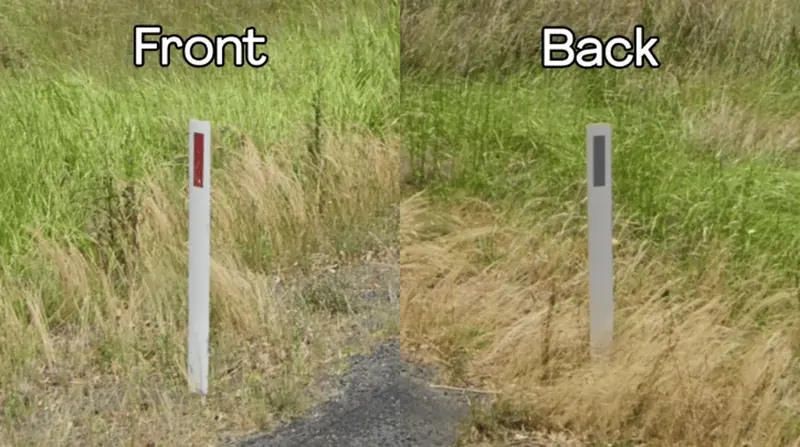
Check the bollards first. Both countries use white bollards with a red reflector, but in Australia the red stays on the front with a grey reflector on the back, while in New Zealand a red strip wraps around the back and shows on the front. Then read the signs: give-way signs have black text in Australia and red text in New Zealand, and blue street signs with white letters point to New Zealand. A double yellow centre line also leans New Zealand.
- Australia clues
- 436
- New Zealand clues
- 71
- photos in the quiz
- 26
 © Google
At a glance
What changes across the border, according to our cards. Each clue comes with its photos further down.
| Clue | Australia | New Zealand |
|---|---|---|
| Bollards | White; red reflector on the front only, grey one on the back | White; a red strip wraps around the back and onto part of the front |
| Give-way signs | Black text | Red text |
| Curve chevrons | Mostly white on black; yellow ones are rarer and have no border | Black on yellow with a thin black border; white on black very rare |
| Road lines | Almost only white; yellow in alpine areas such as Kosciuszko and Mount Hotham | White edges (dashed yellow in built-up areas); dashed white or double solid yellow in the centre |
| Street signs | Almost never blue | Often blue with white letters, especially in rural areas |
| Licence plates | By state: yellow in New South Wales, red letters in Queensland and the Northern Territory | White with black letters; look almost white when blurred |
| Poles | Steel-and-concrete Stobie poles in South Australia | Concrete with one long groove and a small silver possum guard |
| Landscape | Eucalyptus almost everywhere; orange or red dirt in the outback; Tasmania green and rolling | Snowy Southern Alps, volcanoes such as Taranaki and teal glacial lakes |
Clue by clue
Photos from real MetaSpotter cards, with the explanation each one carries.
-
01
Bollards
This is the clue you will see most on the road. Both countries use a white bollard with a red reflector, but they place it differently. In Australia the red is a rectangle that stays on the front face, and the back carries a grey reflector. In New Zealand a red strip wraps around the top of the post at the back and carries on across part of the front. If you can see red on the back of the bollard, it is New Zealand.
© Google🇦🇺 AustraliaAustralian bollards are white with a red reflector on the front and a grey reflector on the back. New Zealand's bollard uses a red reflector that wraps from end to end around the back, instead of stopping in the middle like the Australian one. 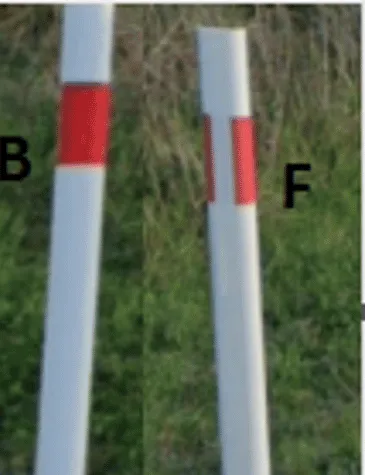 © Google
🇳🇿 New ZealandNew Zealand has a distinctive white bollard with a red reflective strip that wraps all the way around the back and continues onto part of the front. -
02
Give-way signs and chevrons
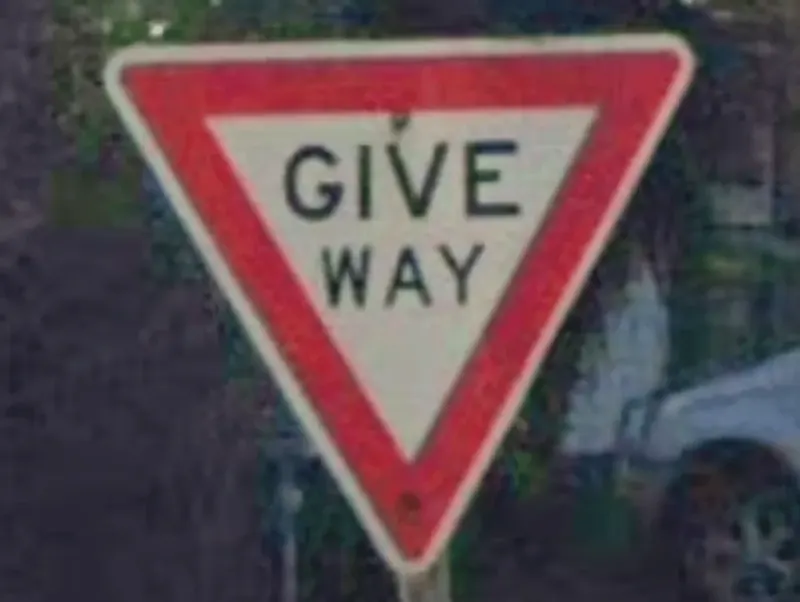
The give-way sign has the same shape and border in both countries; what changes is the text: black in Australia, red in New Zealand. On curves, New Zealand uses black-on-yellow chevrons with a thin black border, and white-on-black ones are very rare there. Australia mostly uses white-on-black chevrons; it has yellow ones too, but they are much less common and lack that border.
 © Google
🇦🇺 AustraliaGive-way signs in Australia have a white border and black text reading GIVE WAY. New Zealand's give-way signs share the same triangular shape but use red text instead of black. 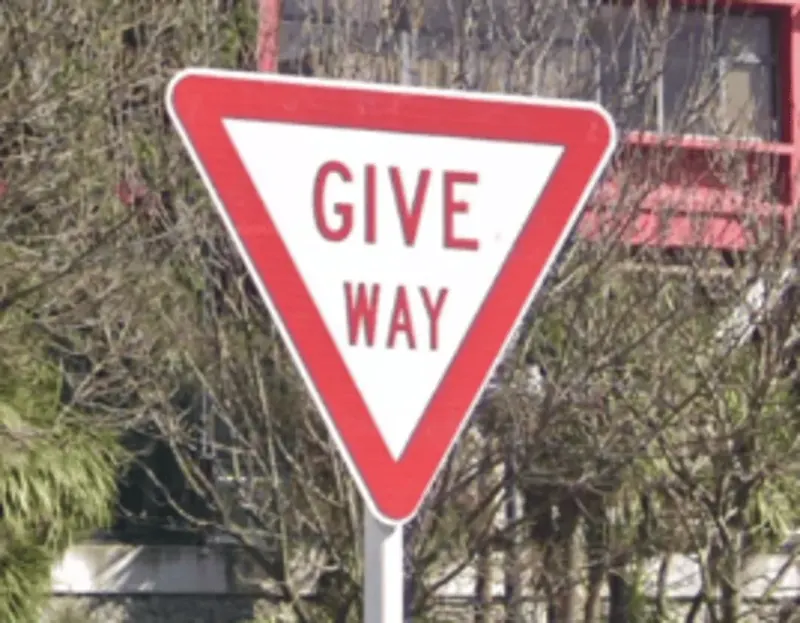 © Google
🇳🇿 New ZealandNew Zealand give-way signs have a white border with red text, while across the Tasman in Australia the text on the same sign is black. 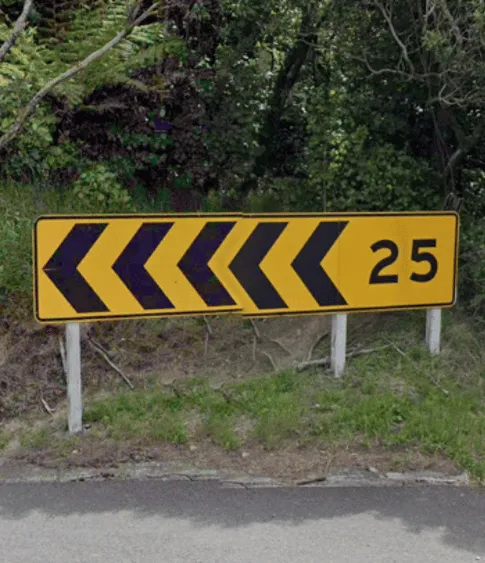 © Google
🇳🇿 New ZealandNew Zealand uses black-on-yellow chevrons with a thin black border (white-on-black chevrons are very rare). Australia's chevrons use the same colours but lack the border. -
03
Road lines
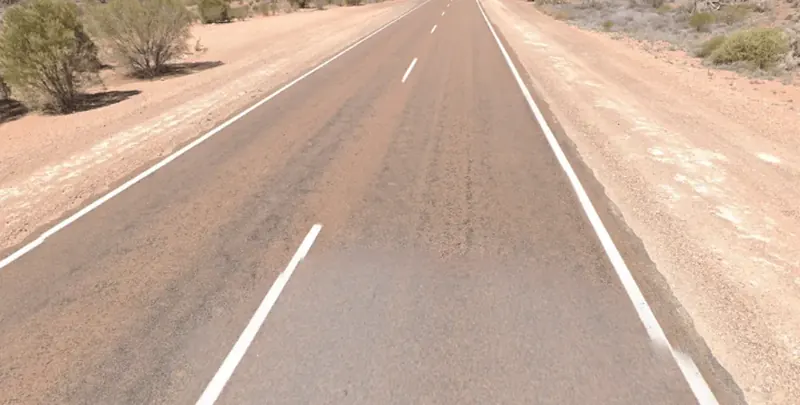
Australia paints almost all of its lines white. New Zealand uses white edge lines, which turn into dashed yellow lines in built-up areas, and either a dashed white line or a double solid yellow line in the centre. A double yellow centre line leans strongly New Zealand, except in Australia’s high country: around Mount Kosciuszko and Mount Hotham there are yellow lines too. A road with all-white lines decides nothing, because New Zealand has those as well.
 © Google
🇦🇺 AustraliaAustralia uses almost exclusively white road lines, with a few rare exceptions in alpine regions such as Mount Kosciuszko and Mount Hotham. 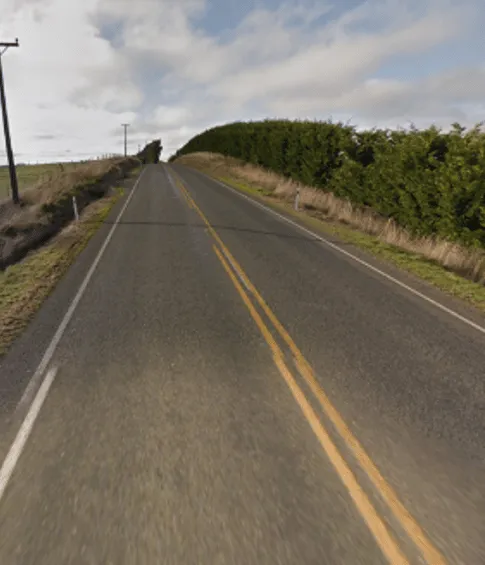 © Google
🇳🇿 New ZealandNew Zealand normally uses white outer lines, with yellow dashed outer lines in populated areas; inner lines are a single dashed white line or unbroken double yellow lines. Australia, by contrast, rarely has yellow inner lines outside snowy regions. 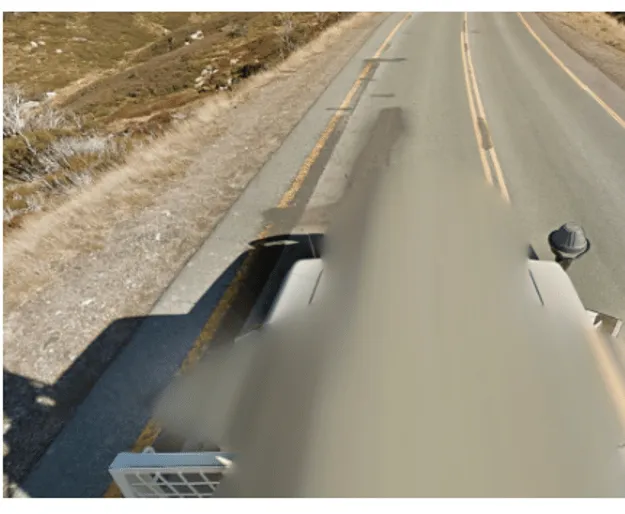 © Google
🇦🇺 AustraliaRoads around Mount Kosciuszko, in the New South Wales Snowy Mountains, sometimes carry all-yellow centre lines instead of the usual white; a distinctive white truck with a snorkel and cab guard also works this area. -
04
Street signs
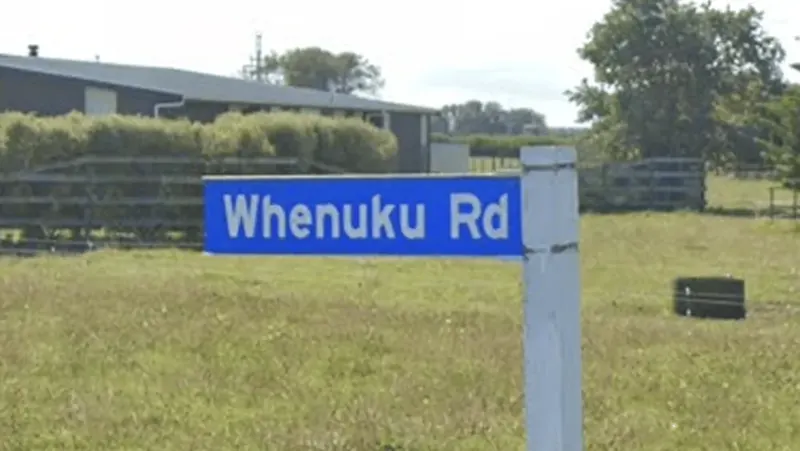
New Zealand often uses blue street signs with white letters, especially in rural areas, although other colours exist too. In Australia a blue street sign is almost unheard of. A blue sign leans strongly New Zealand; a sign in any other colour rules neither country out.
 © Google
🇳🇿 New ZealandNew Zealand often uses blue street signs with white text, especially in rural areas, though other colours also appear; Australia almost never uses blue street signs. -
05
Licence plates
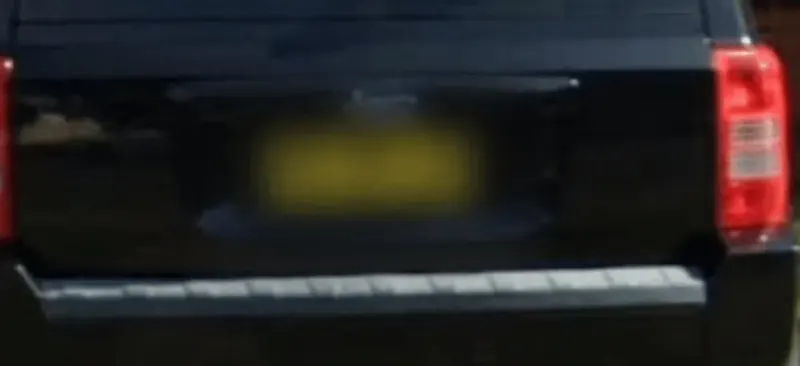
New Zealand plates are white with black letters and look almost white through the Street View blur; some custom plates have blue or black sides. In Australia each state has its own design, and some stay recognisable even when blurred: more than a couple of yellow rear plates point to New South Wales, and red letters point to Queensland (dark red) or the Northern Territory (lighter red). A yellow plate or coloured lettering points to Australia; a white plate only rules out some states.
 © Google
🇦🇺 AustraliaSeeing more than a couple of yellow rear plates in Australia is a good sign you're in New South Wales, which issues them far more than other states. 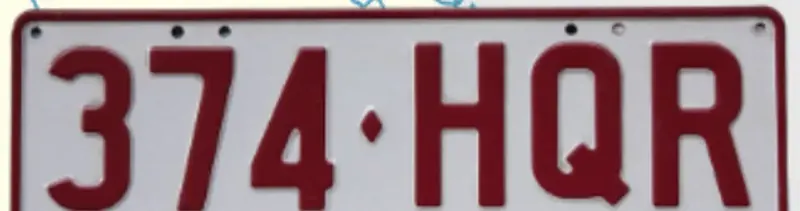 © Google
🇦🇺 AustraliaQueensland plates have dark red lettering, similar to but darker than the lighter red used in the Northern Territory; an older green-and-white version also exists and could still show up. 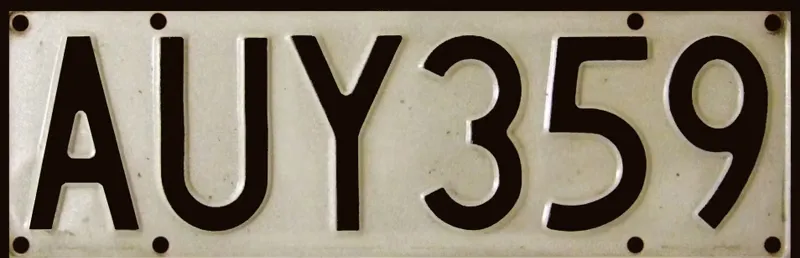 © Google
🇳🇿 New ZealandNew Zealand uses white plates with black text, which through the blur appears mostly white; some custom plates have blue or black sides. This is most useful for telling New Zealand apart from certain Australian states. -
06
Poles
The most common pole in New Zealand is concrete, with one long groove running most of its length, and it usually carries a small silver possum guard; holey concrete poles also occur. In South Australia the typical pole is the Stobie, a steel frame filled with concrete. A few thousand stand in other states, most notably Tasmania, but they are very rare there.
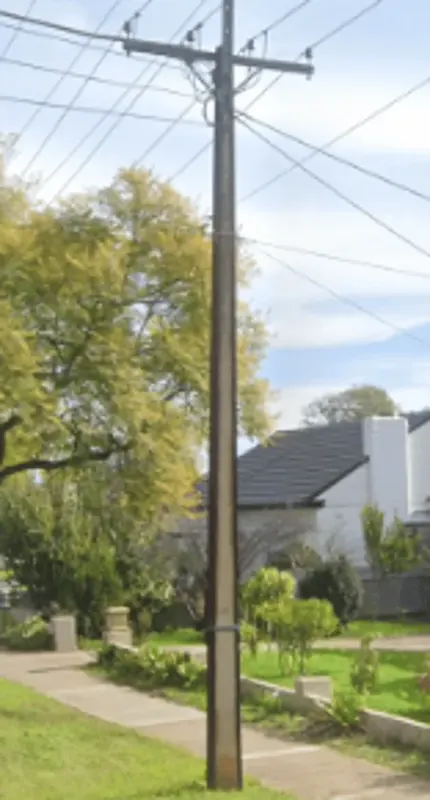 © Google
🇦🇺 AustraliaThe iconic Stobie pole, built from a steel frame filled with concrete, is specific to South Australia; its pole tops (a trident shape or a rotated letter E) are also distinctive. A few thousand exist in other states, most notably Tasmania, but they are very rare there. 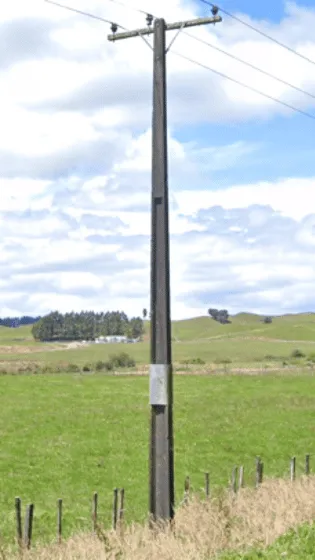 © Google
🇳🇿 New ZealandThe most common pole in New Zealand is a concrete pole with one long indent running most of its length, usually fitted with a small silver possum guard; holey concrete poles also occur. -
07
Trees and landscape
The eucalyptus, with light-coloured bark and puffy clusters of leaves, is by far the most common tree in Australia, although its exact look varies a lot by region. In the outback, straight roads run through orange or red dirt and short, shrubby trees, as on the Stuart Highway between Alice Springs and Pimba. New Zealand’s landscape cards are about mountains, volcanoes and lakes: the Southern Alps run through most of the South Island, Mount Taranaki can be seen from far away across flat farmland, and around Queenstown there are teal glacial lakes. Watch out for Tasmania: green rolling hills, unusual for the rest of Australia, but with eucalyptus along the road.
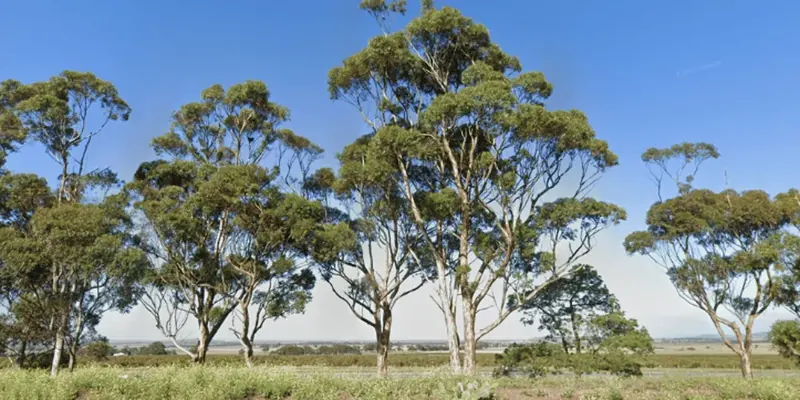 © Google
🇦🇺 AustraliaEucalyptus trees, with light-coloured bark and puffy clusters of leaves, are by far the most common tree in Australia, though their exact look varies a lot by region. 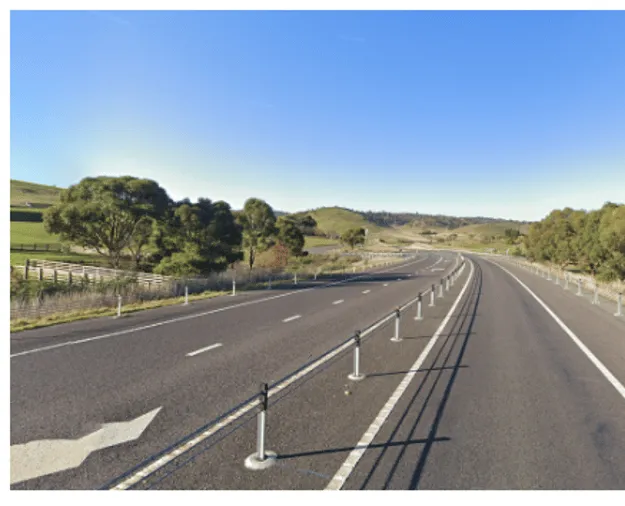 © Google
🇦🇺 AustraliaGreen rolling hills with roadside eucalyptus, sometimes looking dry in winter coverage, mark the cool-temperate landscape of Tasmania, unusual for the rest of Australia. 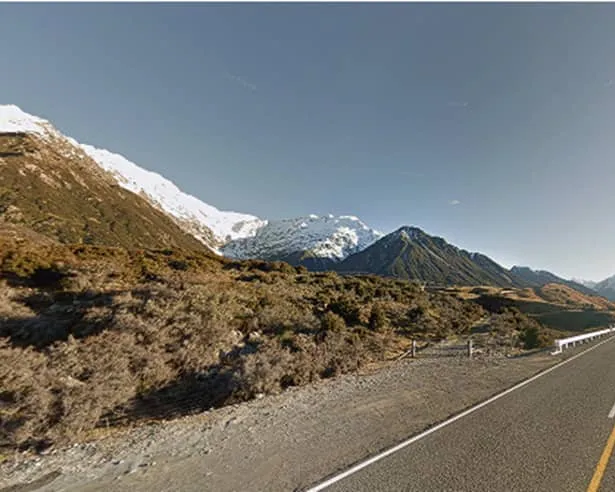 © Google
🇳🇿 New ZealandThe Southern Alps stretch through most of the South Island, and vegetation on the mountains becomes rarer the further south you look.
The hard case: Tasmania and Australia’s high country
The landscape and road-line clues fail where Australia looks like New Zealand: Tasmania has green rolling hills, and around Kosciuszko and Mount Hotham there are yellow lines. There, the roadside decides: the reflector on the bollard, the colour of the give-way text and the colour of the street signs.
- TasmaniaGreen hills, sometimes dry-looking in winter coverage, with eucalyptus along the roadside; a few Stobie poles, but very rare.
- Kosciuszko and Mount HothamAlpine exceptions to Australia’s white lines; around Kosciuszko the whole centre line is sometimes yellow.
- Hawke’s BayNew Zealand: dry, golden grassy hills, often sunny and with a white Street View car in newer coverage.
- Mount GambierAustralia, in South Australia: rows of pine trees planted in pale, almost white soil.
What does not decide
These clues look the same on both sides of the border, so on their own they do not decide. In MetaSpotter, when a card shows one of them, the other country is never offered as a wrong answer.
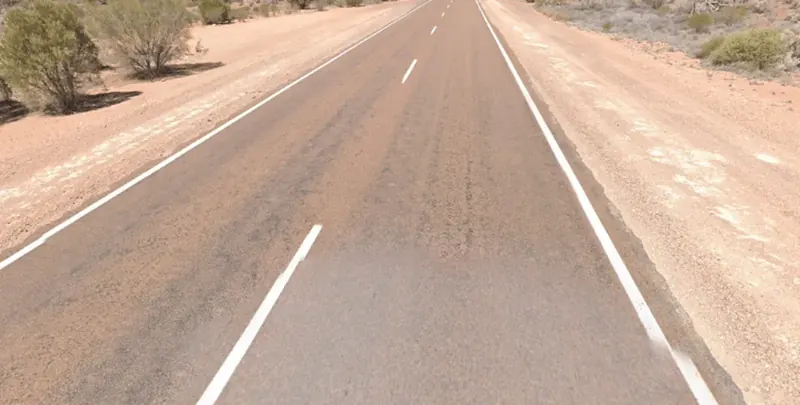 Road lines
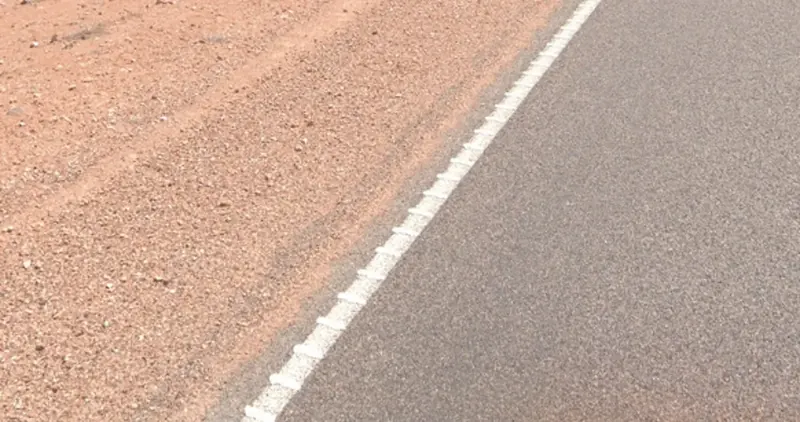 Rumble strip
How to learn them and keep them
Reading this page is not enough: in a week you will have forgotten half of it. These clues stick when you review a few every day, right before you forget them. Start with Australia · Basics (20 cards) and New Zealand · Metas (28), then mix them with the rest of the region in Oceania · Identify countries.
Study Oceania · Identify countriesAustralia and New Zealand decks
More guides
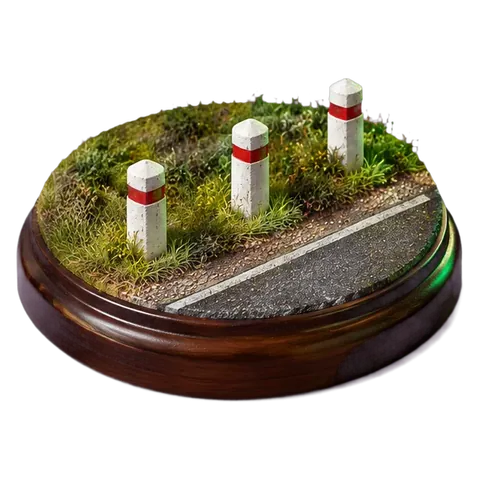
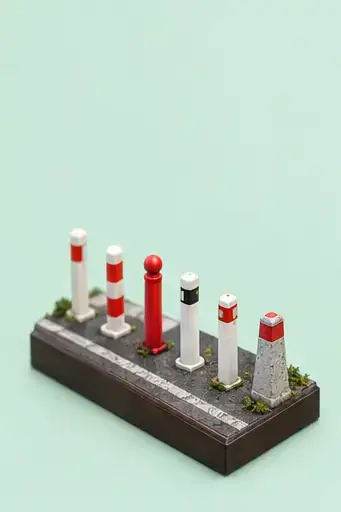
Bollards
The short posts at the edge of the road. Shape, colour and reflector change by country.
Poles
Wood, concrete or metal; holes, ladders and the top of the pole give away the region.
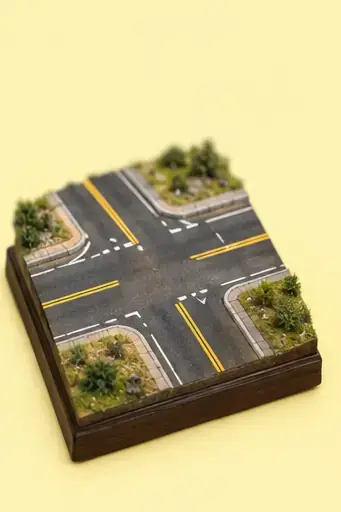
Road lines
Yellow or white centre, edge lines, doubles, dashes: one of the most reliable metas.
Camera car
Camera generation, antennas, mirrors and the colour of the car that shot the coverage.
Clues come from Learnable Meta maps by Lireax, trausi, SB387, LordKeks, Major Bajor, MR_Mythic, realBeelzebuub, Stingray, logoff. Photos: Google Street View, © Google. Checked by hand by the MetaSpotter team on 19 October 2026. How we make the content