
Comparison and practice
How to tell Czechia from Slovakia in GeoGuessr
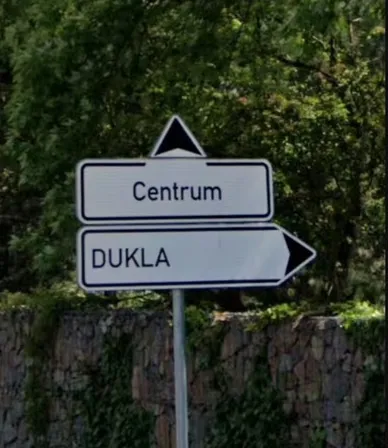
Look at the direction signs first. Czech ones are shaped like an arrow with a solid tip; Slovak ones are blue rectangles with a small white arrow printed on them, and Slovak signs use a much bolder font. Then read the letters and the street-name signs: Ř, Ě and Ů mean Czechia; Ľ, Ô, Ä, Ŕ and Ĺ mean Slovakia. A red street-name sign leans Czechia; a white one with a red border and blue text leans Slovakia.
- Czechia clues
- 40
- Slovakia clues
- 72
- photos in the quiz
- 29
 © Google
At a glance
What changes across the border, according to our cards. Each clue comes with its photos further down.
| Clue | Czechia | Slovakia |
|---|---|---|
| Direction signs | Arrow-shaped with a solid tip; recognisable even from behind | Blue rectangles with a small white arrow |
| Sign font | Fairly thin | Very bold |
| Sign borders | Set slightly in from the edge by a strip of background colour; motorway signs too | More often right on the edge; on motorway signs the white border sits at the edge |
| Letters and “street” | Ř, Ě and Ů; “ulice”, often left off | Ľ, Ô, Ä, Ŕ and Ĺ; “ulica” |
| Street-name signs | Bright red, sometimes blue | White, with a red border and blue text |
| House numbers | Blue or red enamel with a thin white border | White with a thin red or black border |
| Sign posts | Thick black cap | Open, grey metal cap or a thin black cap; small signs on double posts |
| Railway crossings | The cross with no plate behind it | The cross on a white rectangle |
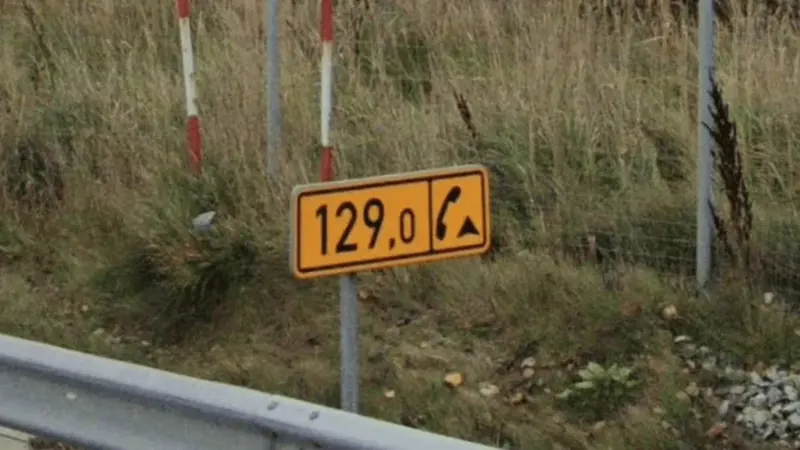
| Kilometre markers | Yellow outline outside the black frame, no middle line | Two sections split by a black line: road number above, distance below |
| Houses | Semi-detached pairs, often in two colours | Grey metal roofs (especially in the east) and houses with the short side to the road |
| Landscape | Rolling, with plenty of hills and few tall mountains | From very mountainous to completely flat |
| Coverage | Gen 2 exists, though rare; much Gen 3 shot in winter | No Gen 2; wintry Gen 3 is uncommon |
Clue by clue
Photos from real MetaSpotter cards, with the explanation each one carries.
-
01
Direction signs
This is the clue that decides the most. The Czech sign is cut into the shape of an arrow, with a solid triangular tip, so you can recognise it even from behind. The Slovak one is a blue rectangle with a thin white border and a small white arrow printed inside. A plate cut to a point means Czechia; a rectangle with the arrow printed on it means Slovakia.
© Google🇨🇿 CzechiaCzech directional signs are shaped like an arrow with a solid, filled-in tip, so they are recognizable even from behind. Slovakia uses small white arrows instead, without this bold triangular shape. 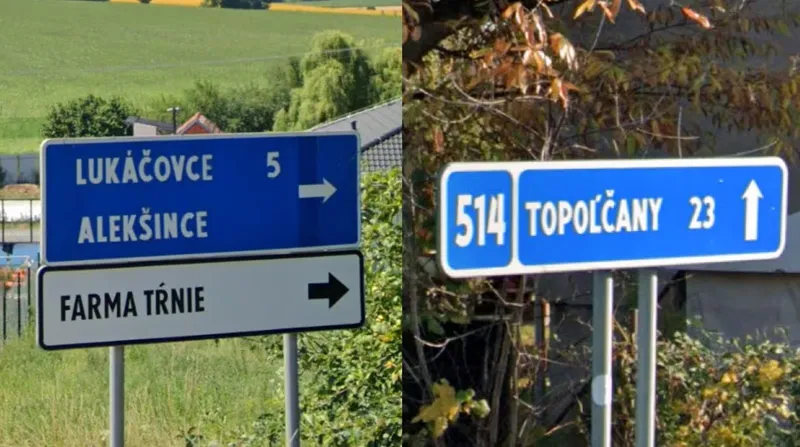 © Google
🇸🇰 SlovakiaSlovak directional signs are blue with small white arrows and thin white borders. Czechia's equivalent signs are shaped like a solid arrow instead of a rectangle with an arrow printed on it. -
02
Sign font and borders
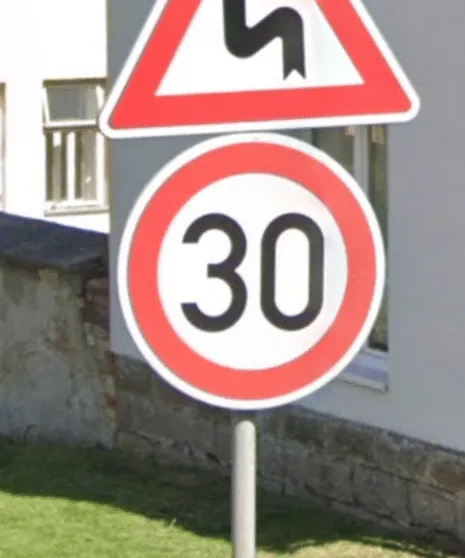
Look at the numbers and place names: Czech signs use a fairly thin font, Slovak signs a much bolder one. The border changes too. In Czechia it usually sits slightly in from the edge, separated from it by a strip in the sign’s background colour; in Slovakia it more often runs right along the edge. Motorway signs, blue or green in both countries, follow the same pattern: on Czech ones a second coloured strip separates the white border from the edge, while on Slovak ones the white border is the edge.
 © Google
🇨🇿 CzechiaCzech road signs use a fairly thin font for their text and numbers. Slovak signs normally use a much bolder font by comparison. 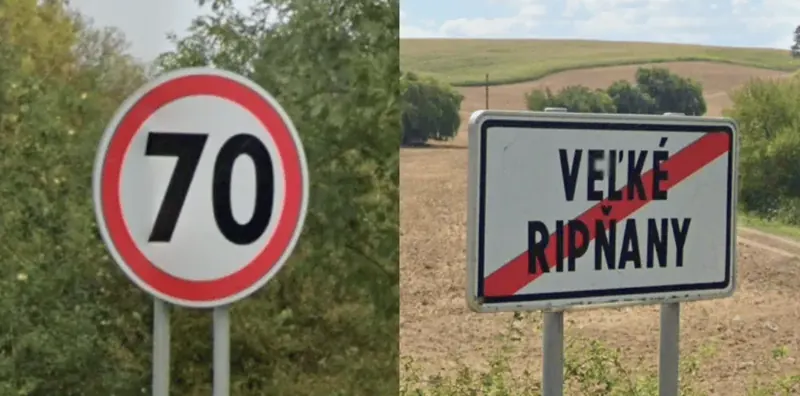 © Google
🇸🇰 SlovakiaSlovak road signs normally use a very bold, thick font for numbers and place names. The font on Czech signs is noticeably thinner. 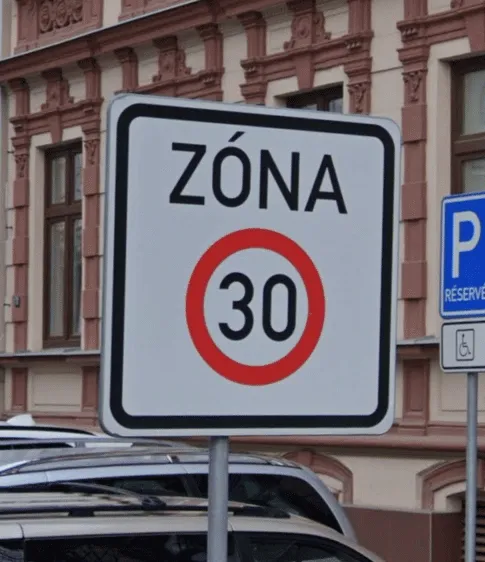 © Google
🇨🇿 CzechiaCzech road signs usually have their border set slightly in from the edge, separated by a strip in the same colour as the sign's background. In Slovakia the border more often sits right on the edge. -
03
Letters, street signs and house numbers
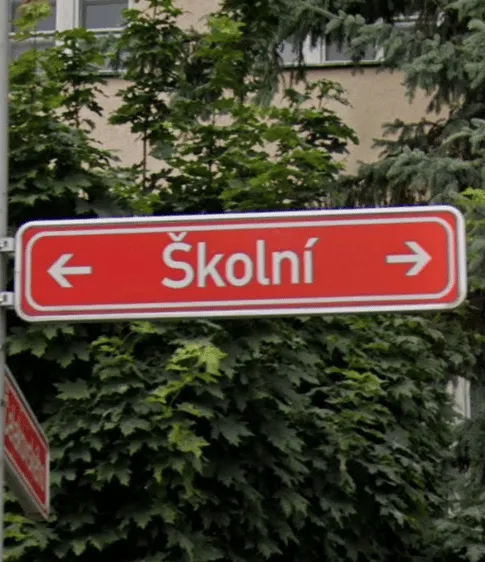
Both languages share the acute-accented vowels (á, é, í, ó, ú, ý), but only Czech uses Ř, Ě and Ů, and only Slovak uses Ľ, Ô, Ä, Ŕ and Ĺ. The word for street differs as well: “ulice” in Czech, “ulica” in Slovak, so a sign reading ULICA is never Czech. Czech street-name signs are usually bright red, sometimes blue, and often leave “ulice” off altogether; Slovak ones are white with a red border and blue text. House numbers follow the same split: blue or red enamel with a thin white border in Czechia, white plates with a thin red or black border in Slovakia.
 © Google
🇨🇿 CzechiaCzech street name signs are typically bright red, either as large wall-mounted plates or thin ones on posts, and sometimes blue. The word 'ulice' (street) is often left off. Slovak signs instead use white plates with a red border and blue text. 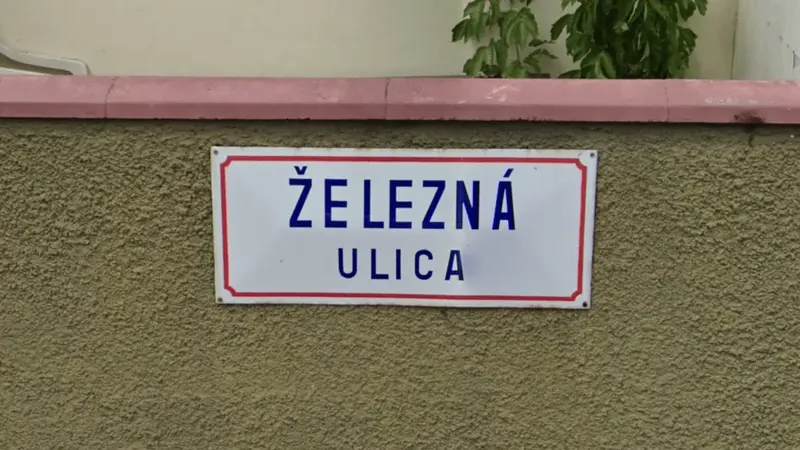 © Google
🇸🇰 SlovakiaWhite street signs with blue text and a thin red border are by far the most common style in Slovakia. 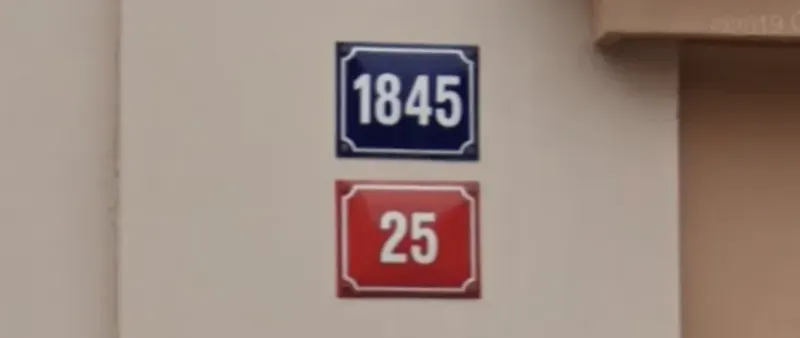 © Google
🇨🇿 CzechiaCzech house numbers are generally shown on blue or red enamel signs with a thin white border. Slovak house numbers instead use white signs with a thin red or black border. -
04
Sign post tops and double posts
Check the top of the post. Most Czech sign posts end in a thick black cap. Slovak ones are usually open, capped with grey metal or topped with a thin black cap. Slovakia also fairly often mounts small signs on two posts; in Czechia large signs may stand on two posts, but small ones rarely do.
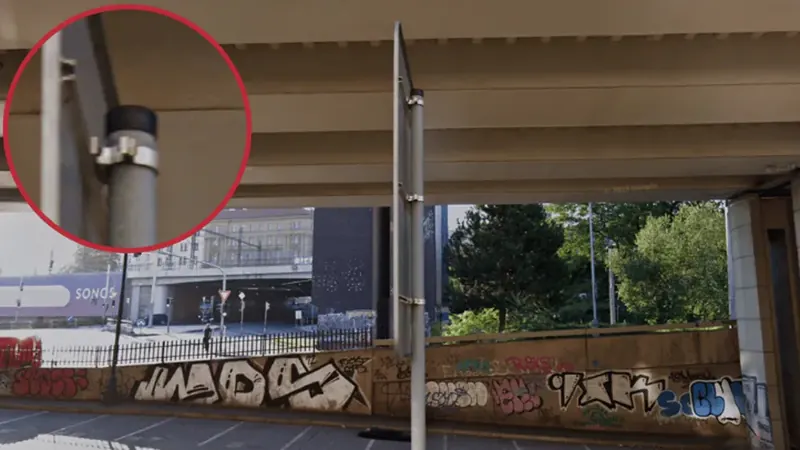 © Google
🇨🇿 CzechiaCzech sign posts typically have thick, black caps on top. Some other European countries have similar caps, but Slovakia usually does not. 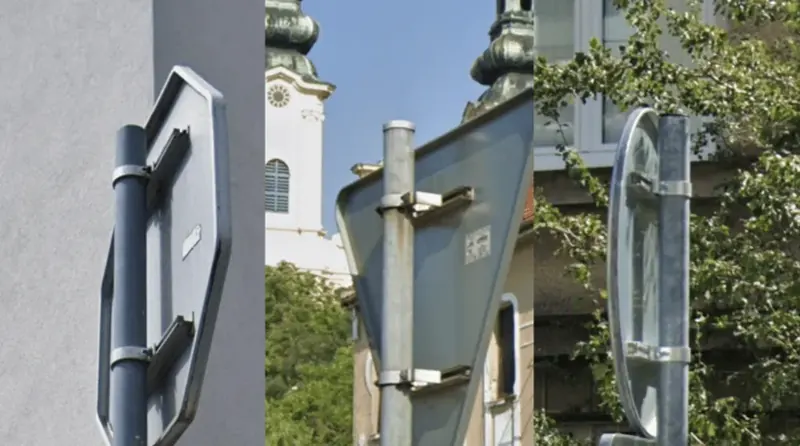 © Google
🇸🇰 SlovakiaThe top of Slovak sign posts is typically either open, capped with grey metal, or topped with a thin black cap. Most Czech sign posts instead have a thick black cap. 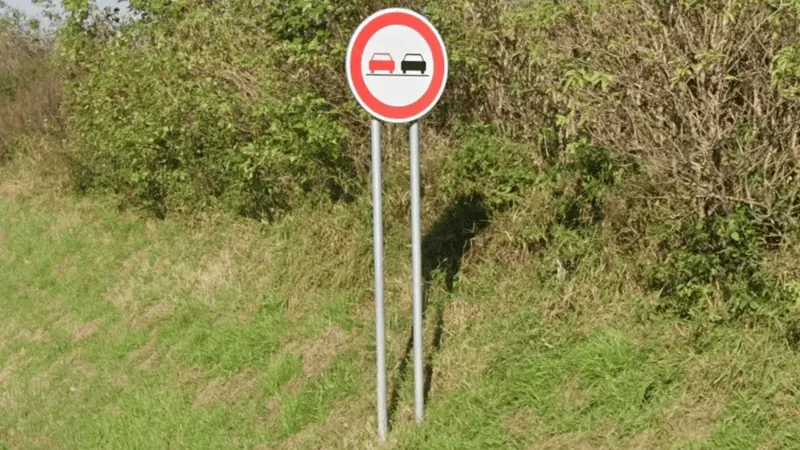 © Google
🇸🇰 SlovakiaIt is fairly common to see small signs mounted on double sign posts in Slovakia. In Czechia, large signs may have double posts, but small signs rarely do. -
05
Railway and pedestrian crossings
The red-and-white railway crossing cross is mounted with nothing behind it in Czechia; in Slovakia it sits on a white rectangle. The pedestrian crossing sign, a man in a hat over five zebra stripes, exists in both countries: the Czech one adds a blue inner border and shows the man’s shirt tucked in, while the Slovak one has a white border and his jacket hangs loose at the waist.
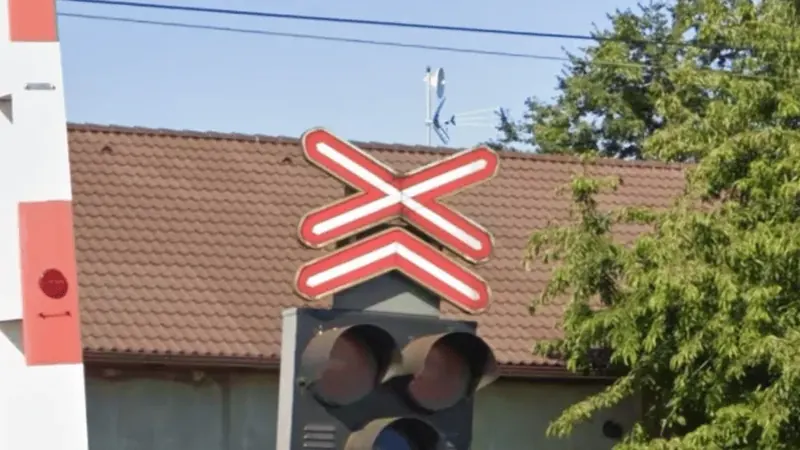 © Google
🇨🇿 CzechiaCzech railway crossbucks (the X-shaped sign) have no coloured background board behind them, unlike in many neighbouring countries. 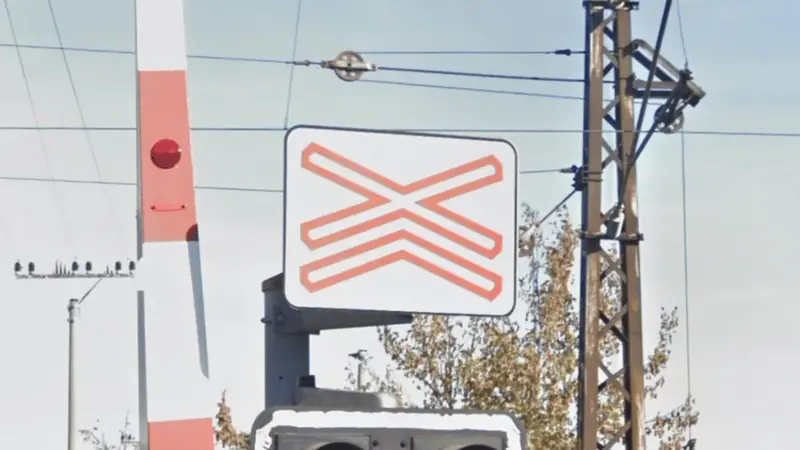 © Google
🇸🇰 SlovakiaThe Slovak railway crossing sign has a white rectangular background behind the red cross. Czech railway crossing signs do not have a background. 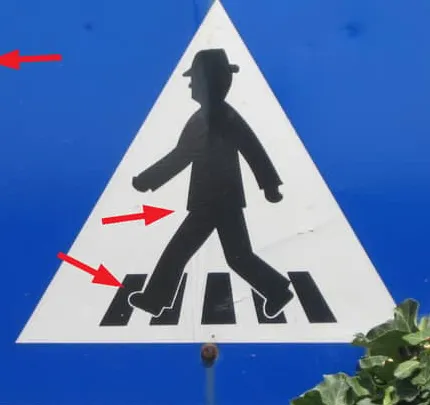 © Google
🇸🇰 SlovakiaAustria, Bulgaria, Czechia and Slovakia all use a pedestrian sign with a walking man in a hat. Among the ones with 5 zebra stripes (Czechia and Slovakia), Slovakia's has a white border on the edge of the sign and the man's jacket drapes loosely at the waist, while Czechia adds an extra blue inner border and shows a tucked-in shirt. -
06
Kilometre markers
Both are yellow with a black frame, but they read differently. The Czech marker has a yellow outline outside the black frame and no line through the middle. The Slovak one is split in two by a horizontal black line, with the road number in the top half and the distance below.
 © Google
🇨🇿 CzechiaCzech kilometre markers have a yellow outline outside the black frame and do not have a black horizontal line through the middle. 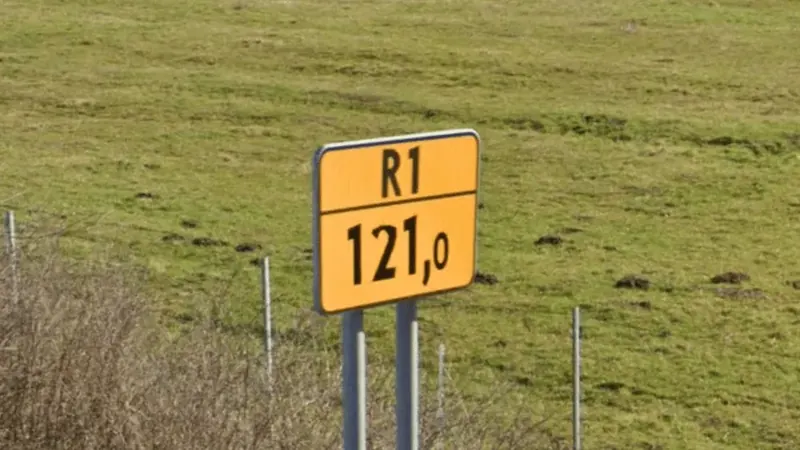 © Google
🇸🇰 SlovakiaSlovak kilometre markers typically have two sections divided by a black horizontal line, with the road number in the top section and the distance below. -
07
Houses and roofs
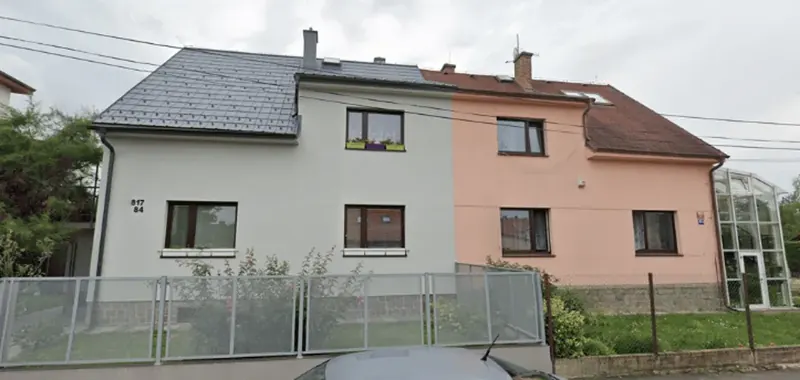
Czech suburbs are full of semi-detached houses, built and painted as a pair that shares a roof, often in two different colours; in Slovakia they are less common. Northern Czechia adds dark wooden houses and timber framing. In Slovakia, especially in the east, grey metal roofs are very common, and outside the most mountainous areas they are far rarer in Czechia. Many Slovak houses also face the road with their short side, the roof ending in a hipped end, which is less common in Czechia.
 © Google
🇨🇿 CzechiaSuburban houses in Czechia are commonly built and painted as connected pairs, often in two different colours. This is less common in most neighbouring countries, including Slovakia. 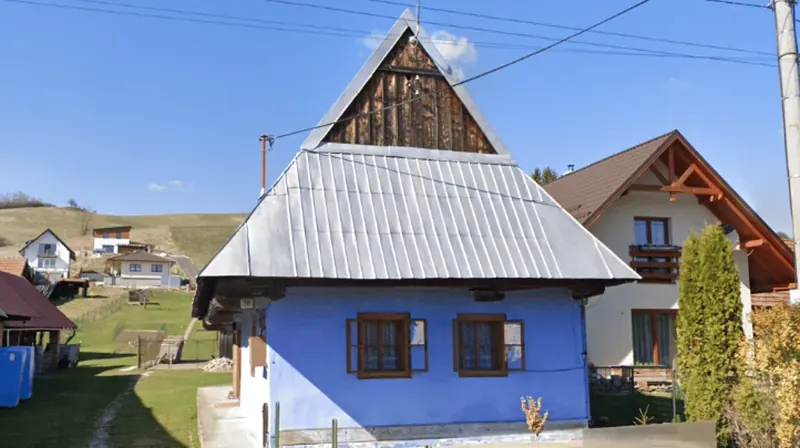 © Google
🇸🇰 SlovakiaGrey metal roofs are very common in Slovakia, particularly in the eastern parts of the country. Outside the most mountainous areas, this style is far less common in Czechia. 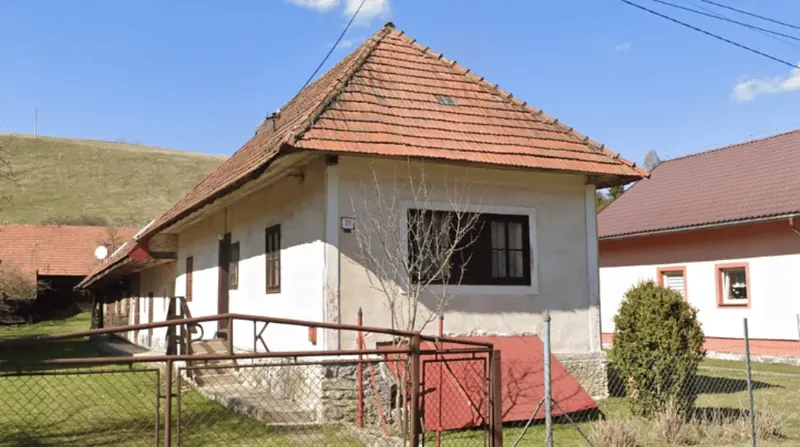 © Google
🇸🇰 SlovakiaMany Slovak houses have their short side facing the road with the roof ending in a hip end. This is also very common in Hungary, but less common in Czechia. -
08
Landscape
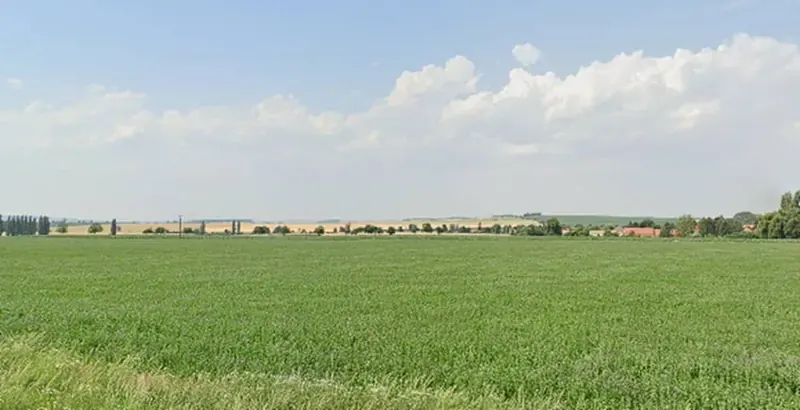
The Czech countryside is rolling: plenty of hills and changes in altitude, but few tall mountains; in northern Bohemia, solitary volcanic hills rise sharply out of flat fields. Slovakia ranges from very mountainous to completely flat: in the north, two wide valleys ringed by tall, sharp mountains; in the west, farmland so flat it runs to the horizon, which Czechia rarely has. Use it to lean one way, not to decide.
 © Google
🇨🇿 CzechiaThe Czech landscape is fairly rolling, with a lot of hills and altitude changes but not many tall mountains. Slovakia generally has more mountains, but also more completely flat areas. 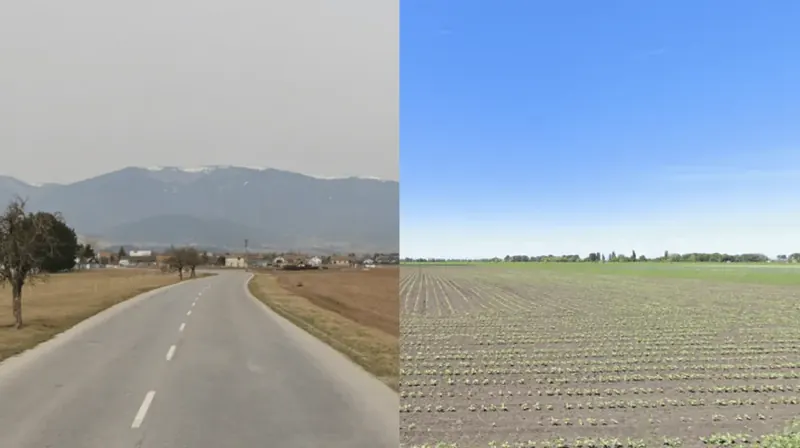 © Google
🇸🇰 SlovakiaThe Slovak landscape ranges from very mountainous to completely flat farmland. Czechia, by comparison, tends to be hillier overall but less sharply mountainous.
The hard case: roads without signs and western Slovakia
Bollards, chevrons, guardrails and concrete poles, often in pairs, look the same on both sides, so on a road with no signs they will not help. There, houses, roofs, landscape and coverage do the work. And watch western Slovakia, which has places that look Czech.
- Skalica (Slovakia)Red street-name signs like Czech ones; the somewhat stylised font gives them away.
- Southern SlovakiaAlong the Hungarian border, bilingual Slovak–Hungarian signs.
- Western Slovak lowlandsCompletely flat fields to the horizon, rare in Czechia.
- Gen 2 coverageExists in Czechia, though rare; Slovakia has none. Grey, wintry Gen 3 also leans Czechia.
What does not decide
These clues look the same on both sides of the border, so on their own they do not decide. In MetaSpotter, when a card shows one of them, the other country is never offered as a wrong answer.
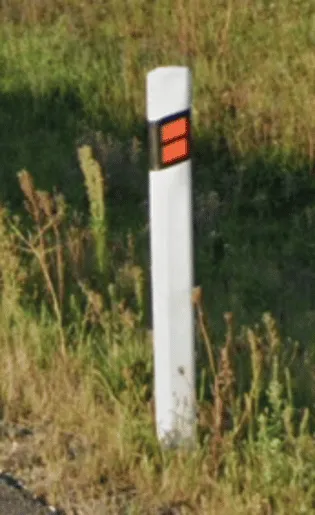 Bollard
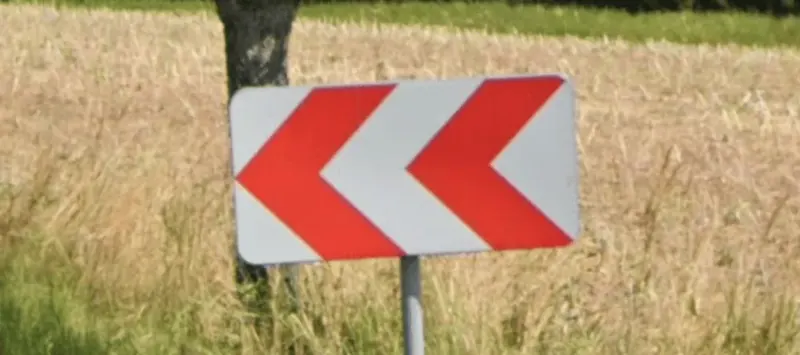 Chevron sign
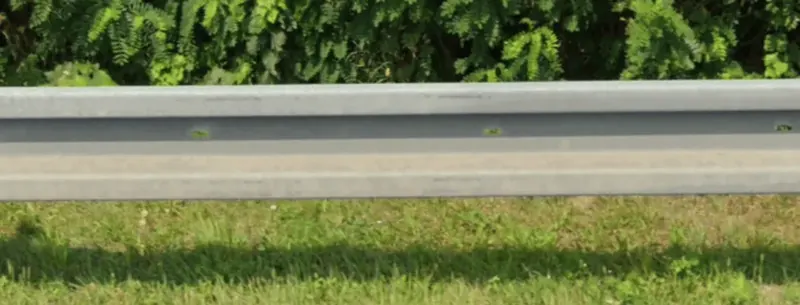 Type B guardrail
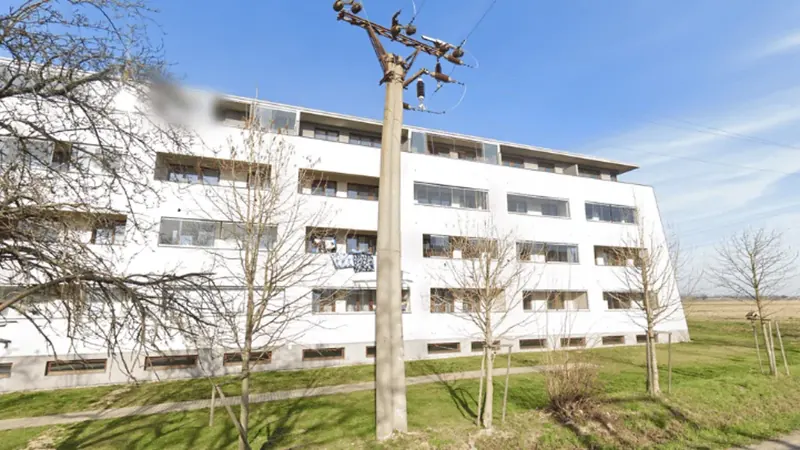 Concrete utility pole
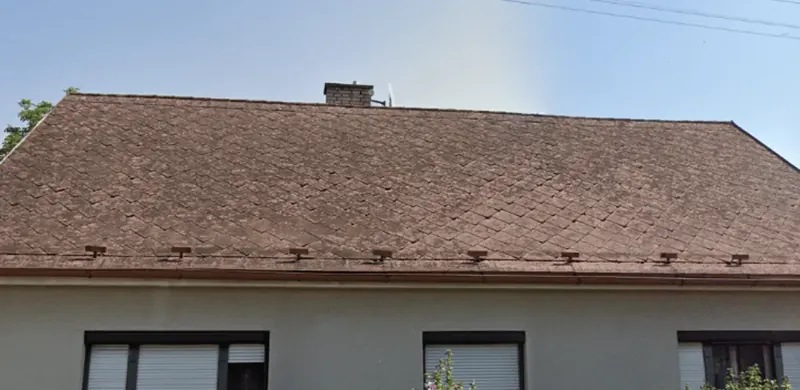 Diamond-shaped roof tiles
How to learn them and keep them
Reading this page is not enough: in a week you will have forgotten half of it. These clues stick when you review a few every day, right before you forget them. Start with Czechia & Slovakia · Regions (30 cards) and Slovakia · Regions (29), then mix them with the rest of the region in N & E Europe · Identify.
Study N & E Europe · IdentifyCzechia and Slovakia decks
More guides
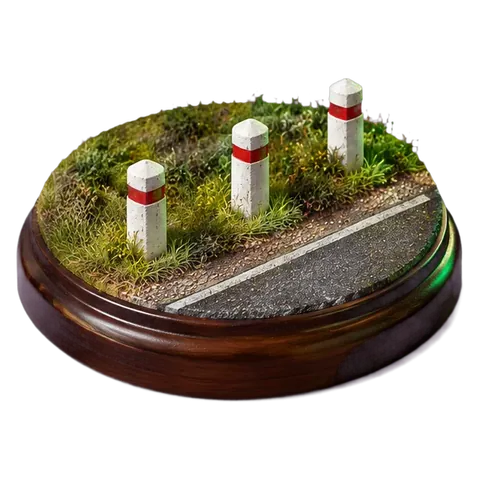
Bollards
The short posts at the edge of the road. Shape, colour and reflector change by country.
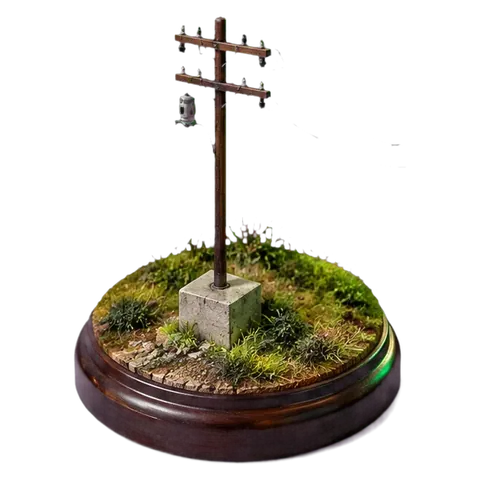
Poles
Wood, concrete or metal; holes, ladders and the top of the pole give away the region.
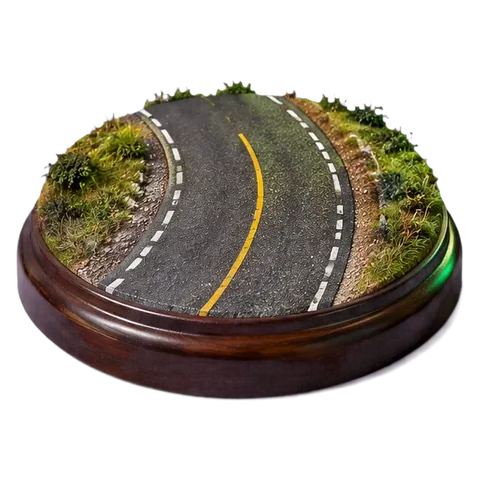
Road lines
Yellow or white centre, edge lines, doubles, dashes: one of the most reliable metas.
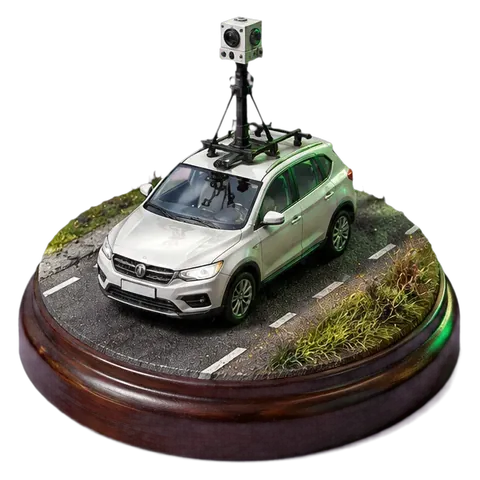
Camera car
Camera generation, antennas, mirrors and the colour of the car that shot the coverage.
Clues come from Learnable Meta maps by trausi, Lireax, BennoGHG, Swaggely, Swaggi, Stingray, LordKeks. Photos: Google Street View, © Google. Checked by hand by the MetaSpotter team on 19 October 2026. How we make the content