
Comparison and practice
How to tell Finland from Sweden in GeoGuessr
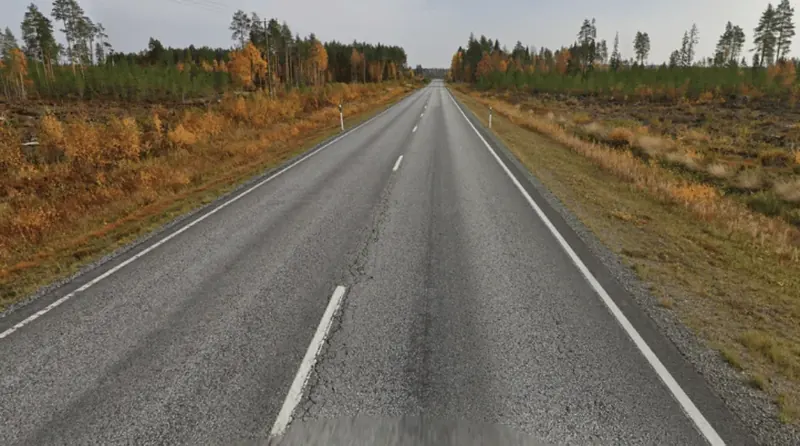
Look at the road’s edge lines first. Where Finland paints them, they are solid white; Sweden paints them in short dashes. Then confirm with the signs: Finnish red-bordered signs have a thin yellow edge outside the red, and chevrons are yellow on black in Finland and yellow on blue in Sweden. A street ending in “-tie” or “-katu” means Finland; one ending in “-vägen” or “-gatan” points to Sweden, except on Åland and Finland’s bilingual coast.
- Finland clues
- 52
- Sweden clues
- 124
- photos in the quiz
- 24
 © Google
At a glance
What changes across the border, according to our cards. Each clue comes with its photos further down.
| Clue | Finland | Sweden |
|---|---|---|
| Edge lines | Solid white where present; dashed only on Åland | Short dashes; on highways they look solid but are sectioned |
| Red-bordered signs | Yellow background and a thin yellow edge outside the red border | Yellow background and a red border with nothing outside it |
| Chevrons | Yellow on black | Yellow on blue (the only country in Europe, bar rare cases in Luxembourg) |
| Language and streets | Finnish: long words, lots of double vowels, Ä and Ö; streets in “-tie” or “-katu” | Swedish: Å, Ä and Ö; streets in “-vägen” or “-gatan” |
| Pedestrian crossing sign | Bold, plain figure on five stripes | Detailed man without a hat on four stripes |
| Blue M sign | No equivalent | Common on minor roads (passing place) |
| Bus stops | Two styles: blue and white, or yellow and black | Very varied; usually show the stop’s name |
| Snow poles | Orange, with a thin white band near the top | Orange, with a tall white reflector slightly above the middle |
| Bollards | White reflector, black stripe at a slight angle | Grey reflector (orange near junctions); some types with a horizontal black section |
| Coverage | Low-quality “Ari” camera (the only one in Europe) and lots of autumn Gen 3 | Gen 4 from red, white or blue cars; red or white confirms Sweden |
Clue by clue
Photos from real MetaSpotter cards, with the explanation each one carries.
-
01
Edge lines
This is the clue that decides most often. When a Finnish road has an edge line, it is solid white: Finland does not use dashed edge lines, except on the Åland Islands. Sweden paints them in short dashes. On Swedish highways the edge line looks solid from a distance, but up close it is split into small, roughly rectangular sections, so take a closer look before you decide. Other European countries use short dashes too, but between these two a dashed edge line leans Sweden.
© Google🇫🇮 FinlandWhere outer road lines are present in Finland they are always solid white; unlike Sweden and Norway, Finland does not use dashed outer lines, except on the Åland Islands. 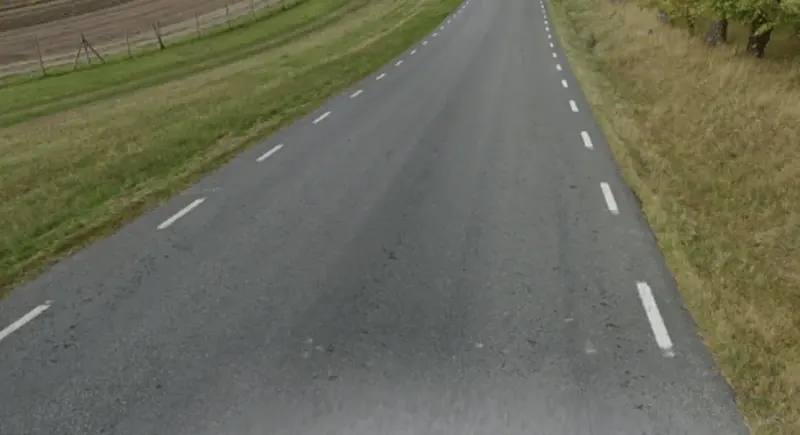 © Google
🇸🇪 SwedenIn the Nordic countries, short dashed outer road lines point to Sweden, long dashes to Norway, and full unbroken lines to Finland. Other European countries can also use short or medium dashes, so use this together with other clues. 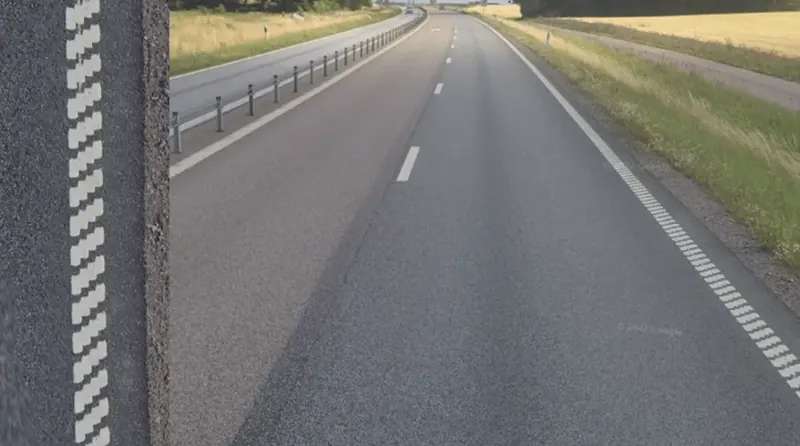 © Google
🇸🇪 SwedenOn Swedish highways, the outer line looks solid from a distance but is actually divided into small rectangular-ish sections, unlike the truly solid lines used in Finland and Norway. Denmark has a similar sectioned pattern, but its individual sections are more clearly rectangular. -
02
The edge of red-bordered signs
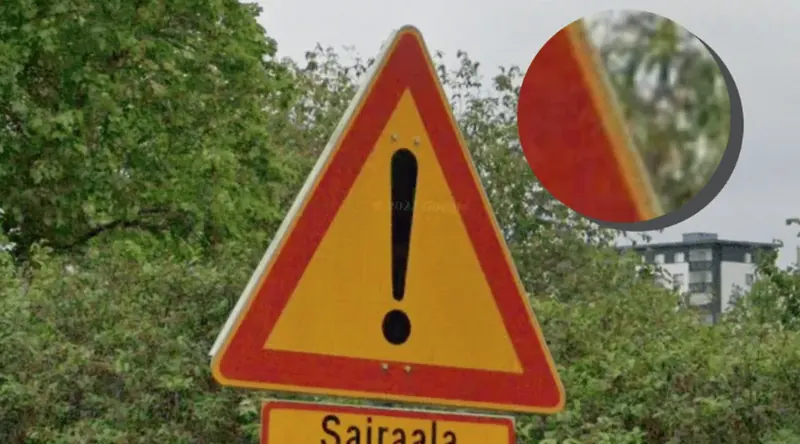
Both countries use signs with a yellow background and a red border, so from a distance they look the same. The difference sits just outside the red: Finnish signs have a very thin yellow stroke running along the edge, a detail not seen in the other Nordic countries, while on Swedish signs the red is the outermost colour. You need to get close, but when you can see it, it decides.
 © Google
🇫🇮 FinlandOn Finnish traffic signs with a red border there is a thin yellow stroke along the edge of the sign, a detail not seen in other Nordic countries. 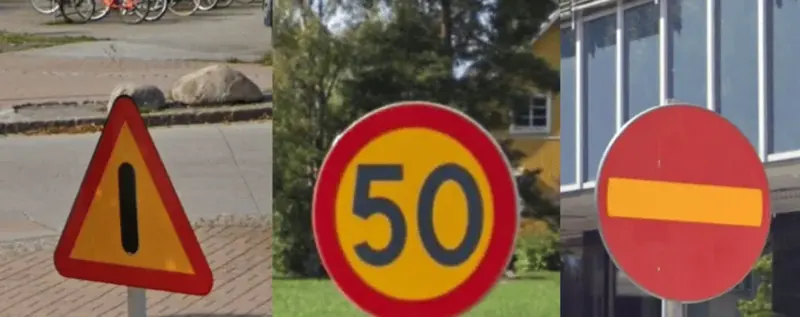 © Google
🇸🇪 SwedenSwedish warning and information signs have a plain red border around a yellow background. Finnish signs look almost identical but add a thin yellow border just outside the red one. -
03
Chevrons
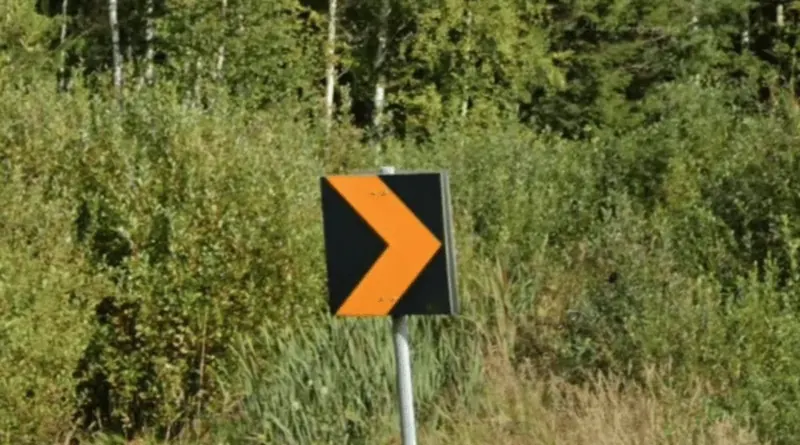
The chevrons that mark bends split the two at a glance. Finland uses black ones with a yellow arrow, like Norway and Iceland. Sweden is the only country in Europe with yellow on blue; very occasionally, the same colours turn up in Luxembourg.
 © Google
🇫🇮 FinlandFinnish chevrons are black with a yellow arrow. Norway and Iceland use similarly coloured chevrons, while Sweden uses blue-and-yellow ones. 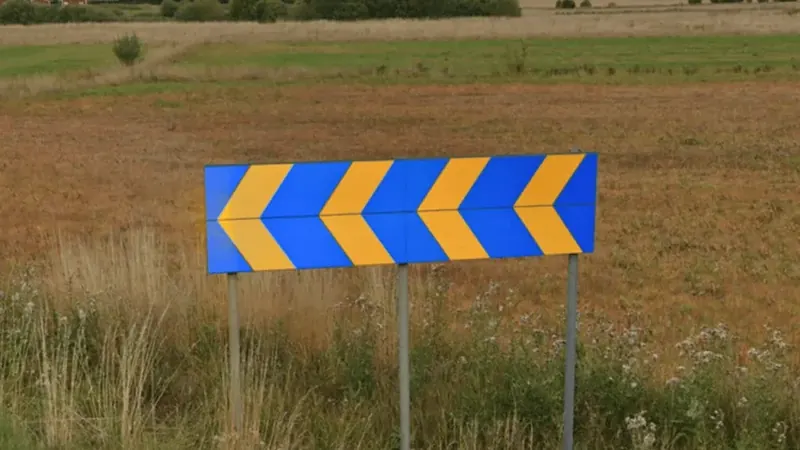 © Google
🇸🇪 SwedenSweden is the only country in Europe that uses yellow arrows on a blue background for chevron signs. Very rarely, similar yellow-on-blue chevrons also appear in Luxembourg. -
04
Language and street names
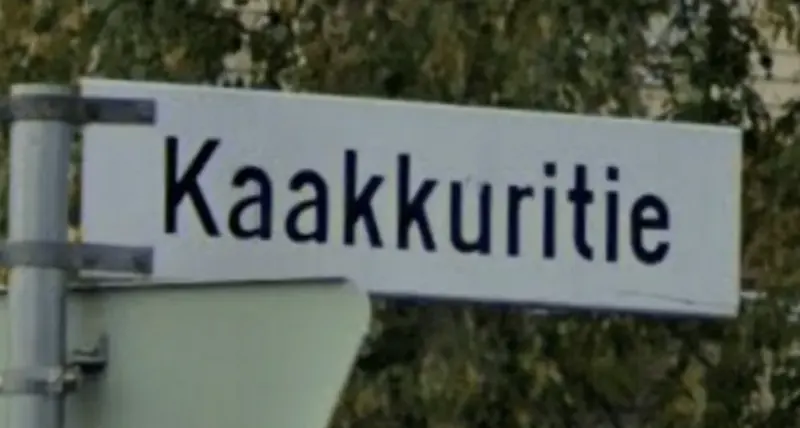
Finnish is unrelated to Swedish, but both use Ä and Ö, so those letters alone do not decide; Swedish adds Å as well. Finnish stands out for its very long words and frequent double vowels. Street names say it more clearly: most Finnish ones end in “-tie” (road) or “-katu” (street), sometimes “-polku” or “-kuja”, on white signs with black text; Swedish ones end in “-vägen” or “-gatan”. Careful, though: Finland has Swedish-language signs too (see the hard case).
 © Google
🇫🇮 FinlandMost Finnish street names end in 'tie' (road) or 'katu' (street); you may also find 'polku' (path) and 'kuja' (alley). 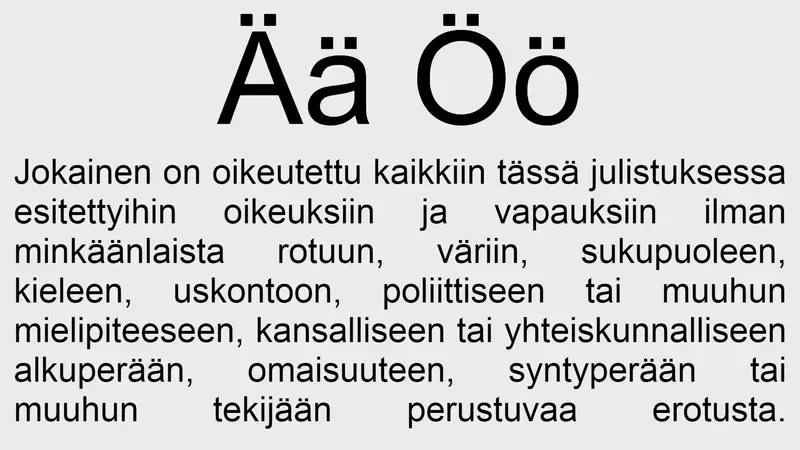 © Google
🇫🇮 Finland · FinnishFinnish is a Finnic language unrelated to the other Nordic languages, and uses the letters Ä and Ö; it can be told apart from closely related Estonian by its many long words and frequent double vowels, and its word for road is 'tie' rather than the Estonian 'tee'. 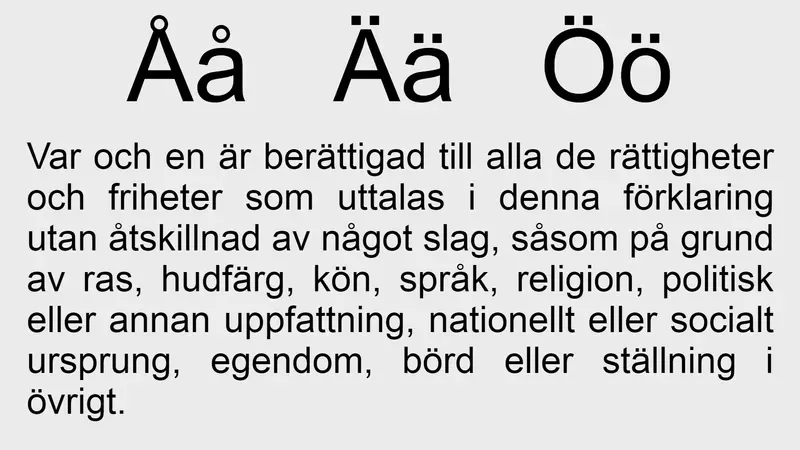 © Google
🇸🇪 Sweden · SwedishSwedish is a North Germanic language using the special letters Å, Ä and Ö. Danish and Norwegian use Å but not Ä/Ö (they use Æ/Ø instead), Icelandic only uses Ö, and Finnish (not Germanic) also uses Ä/Ö. The Swedish word for road is väg/vägen and for street is gata/gatan, unlike Norwegian vei/veien or Danish vej/vejen and gade. -
05
Pedestrian crossings, passing places and bus stops
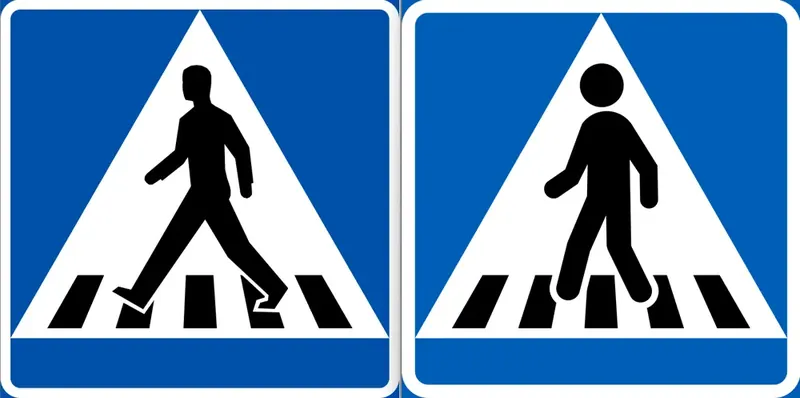
The pedestrian crossing sign changes across the border. Finland’s shows a bold, plain figure with one arm up, on five stripes (in the Finnish card’s photo it is the sign on the right; the one on the left is the detailed style used elsewhere). Sweden’s has four stripes and a detailed man without a hat. The blue passing-place sign with a large white M is common on Swedish minor roads, and Finland has no equivalent. Bus stops help too: Finland has two styles of sign, one blue and white and one yellow and black, while Swedish ones vary a lot and usually show the stop’s name.
 © Google
🇫🇮 FinlandFinland uses a bold, non-detailed pedestrian silhouette with 5 zebra stripes and one arm raised; the more detailed silhouette (left) appears in other European countries. Unlike Denmark's similar bold sign, Finland's figure has an arm pointing up. 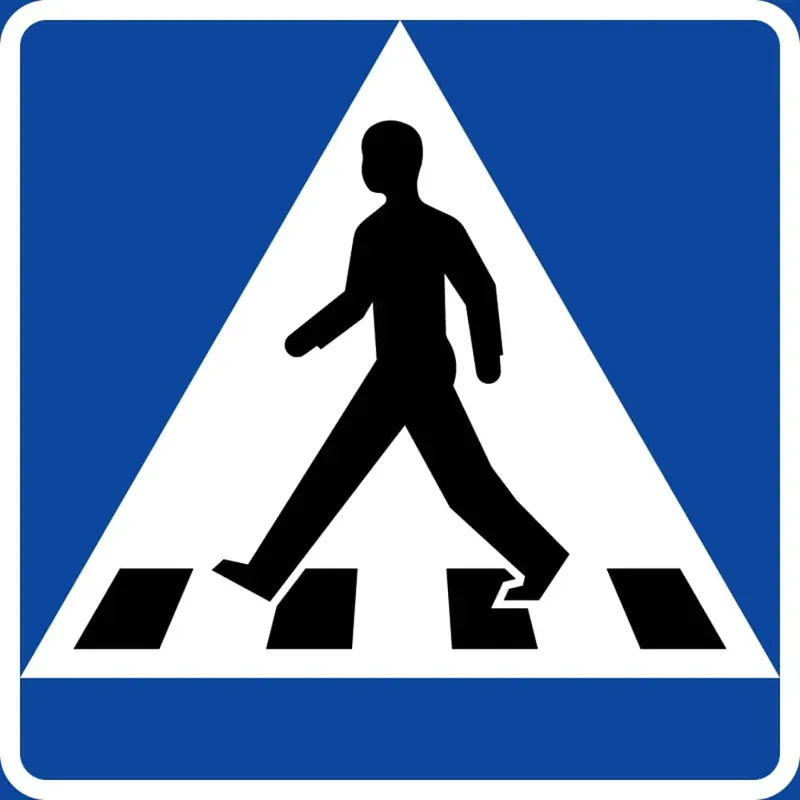 © Google
🇸🇪 SwedenNorway, Sweden and Bulgaria all use a four-stripe zebra crossing on their pedestrian signs, but only Sweden's sign shows a detailed man silhouette without a hat, which makes it easy to tell apart once you know the shape. 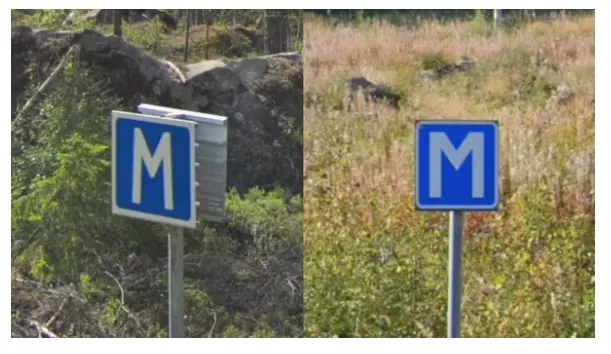 © Google
🇸🇪 SwedenThis blue passing-place sign with a large white M is common on Swedish minor roads. Norway has a similar sign, but its font is different: the middle point of the M reaches all the way to the bottom of the letter. Finland has no equivalent sign. -
06
Snow poles
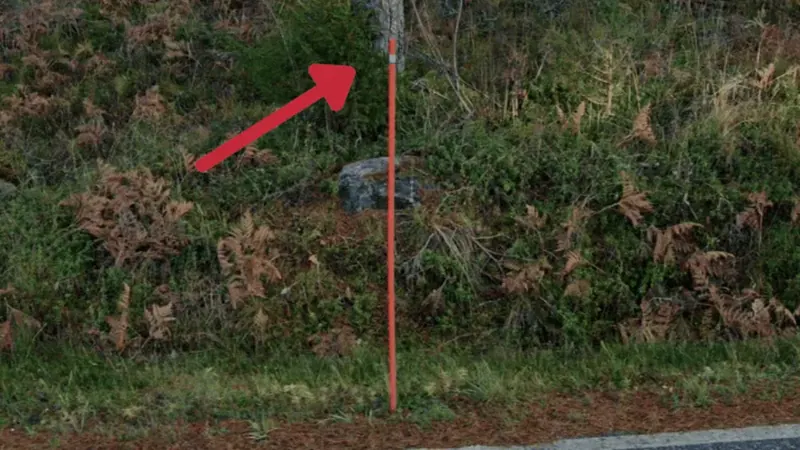
Snow poles are usually orange in both countries; what changes is where the white sits. The Finnish pole usually has a single thin white band, very close to the top. The Swedish one has a tall white reflector slightly above the middle, sometimes with a second, thinner one above it. Thin white right at the top leans Finland; wide white around the middle leans Sweden.
 © Google
🇫🇮 FinlandOrange snow poles with a thin white band near the top are common in Finland. Norway and Sweden have similar poles, but with a much wider white band placed lower, sometimes with multiple bands, while Finnish poles usually have just one. 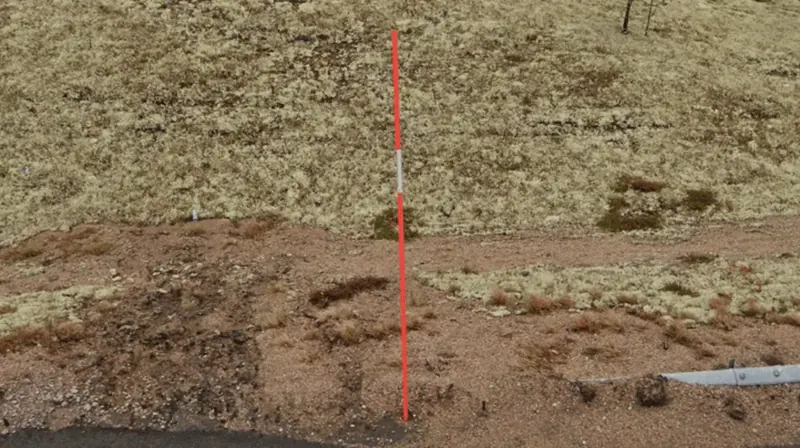 © Google
🇸🇪 SwedenSwedish snow poles are typically orange with a tall white reflector positioned slightly above the middle of the pole; some have a second, thinner reflector above the main one. Finnish poles have a much thinner reflector very close to the top, while Norwegian poles usually have one or two thinner reflectors, often close to the middle. -
07
Bollards
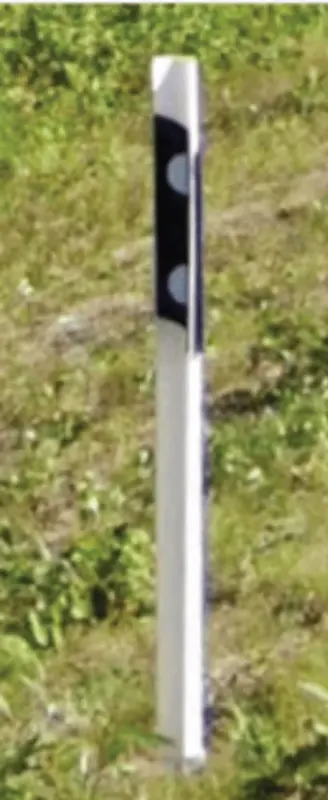
The difference here is small: both countries use black-and-white bollards, thin and curved or round. Look at the reflector and the black section. The Finnish bollard has a white rectangular reflector on the front, two white dots on the back and a black stripe set at a slight angle. Swedish ones usually have a grey reflector, orange near junctions, and one cylindrical type, common on the west coast, in Värmland and in southern Dalarna, has a completely horizontal black section. Use bollards to confirm, not to decide.
 © Google
🇫🇮 FinlandFinnish bollards are black and white with a white rectangular reflector on the front and two white dots on the back, with a slightly angled black stripe; they come as thin curved posts or round baton-shaped ones. 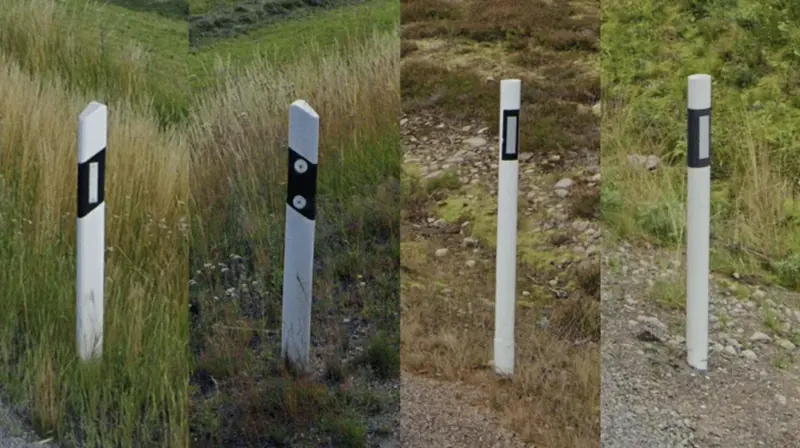 © Google
🇸🇪 SwedenSwedish bollards are typically black-and-white with a grey reflector; near intersections the reflector is often orange instead. They can be wedge-shaped, round, or thin and curved. 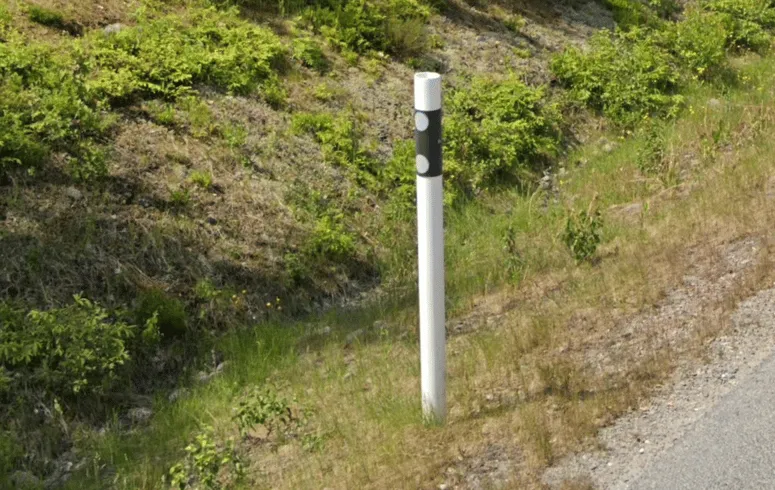 © Google
🇸🇪 SwedenThis cylindrical bollard has a completely horizontal black section near the top. It is most commonly found near the west coast and in Värmland and southern Dalarna. -
08
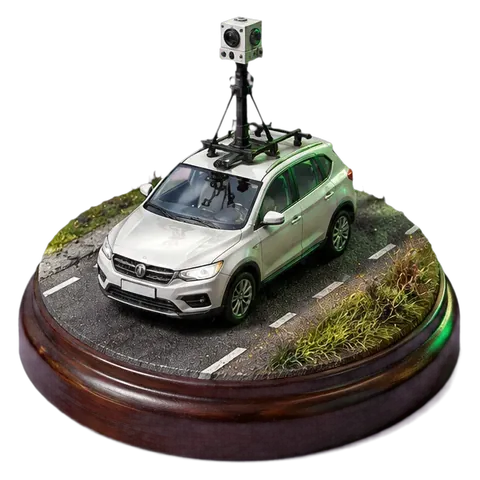
Camera and Google car
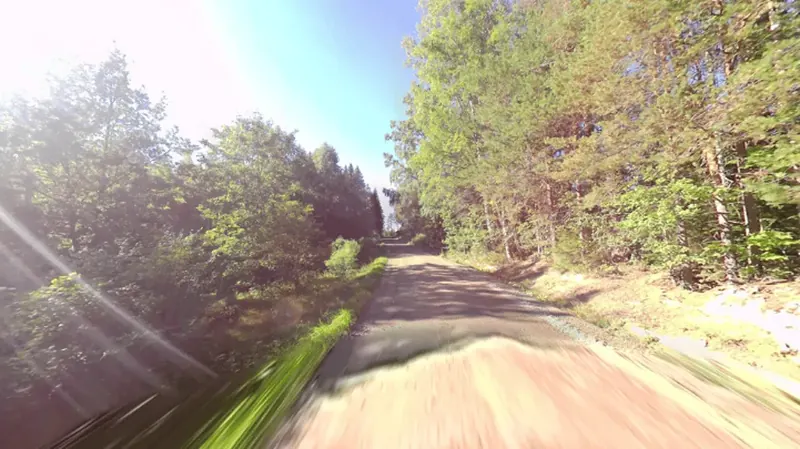
Finland is the only country in Europe with the low-quality camera known as “Ari”: a wide circular blur where the car should be, no sky halo as on Gen 2, and often a brownish tint. Much of its Gen 3 was shot in autumn, with the trees in autumn colours, which is far less common in the other Nordic countries’ Gen 3. Swedish Gen 4 was shot from three cars, red, white and blue. The blue one also appears in Finland, so only red or white confirms Sweden.
 © Google
🇫🇮 Finland · Shitcam (Gen 1 / Ari)Google used a low-quality camera in Finland known as 'Ari' or 'Shitcam'. It has a wide circular car blur and, unlike Generation 2, lacks a sky halo and often looks somewhat brownish. Within Europe, Finland is the only country with this camera. 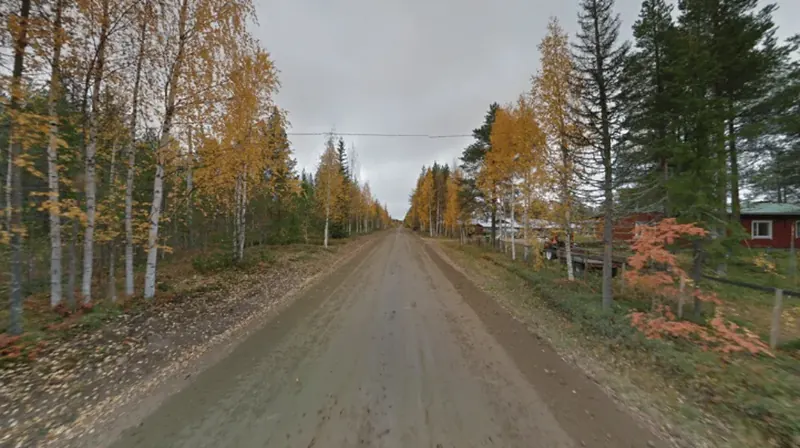 © Google
🇫🇮 FinlandA lot of Generation 3 coverage in Finland was captured in autumn, so trees often show distinct fall colours; this is much less common in Gen 3 coverage of the other Nordic countries, so a strong 'fall vibe' is a useful clue for Finland. 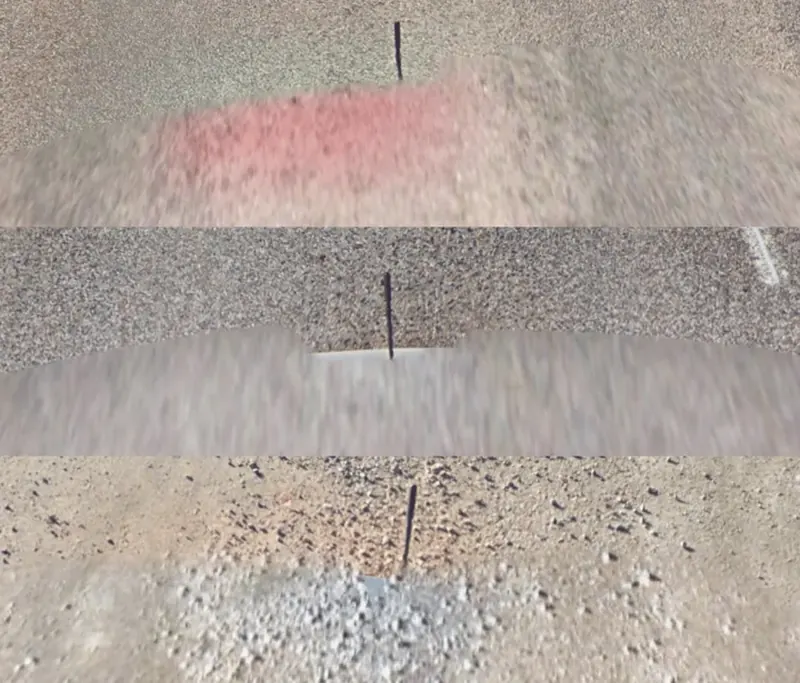 © Google
🇸🇪 SwedenGeneration 4 coverage in Sweden was captured by three cars: red, white and blue, each seen with or without a visible antenna. Only the blue car also appears in Norway, Finland and Denmark, so red or white confirms Sweden.
The hard case: Åland and Finland’s Swedish-speaking coast
On the Åland Islands, which are part of Finland, everything is written in Swedish only, some pedestrian crossing signs have Sweden’s four stripes and edge lines can be dashed. In other words, the language, the crossing sign and the lines all point to Sweden. There, check the licence plates and the bus stops instead. On the south and west coasts of mainland Finland, a Swedish name is not enough either: look for the Finnish name next to it.
- Åland platesWhite with blue text, short and without the blue EU strip that mainland Finnish plates have: on Street View they look almost entirely white.
- Åland bus stopsA white plate with four digits on the pole, sometimes with a semicircular sign on top.
- South and west coast of FinlandOften bilingual street signs: the Finnish name in “-tie” or “-katu” next to the Swedish one in “-vägen” or “-gatan”.
- HelsinkiStreet signs with the Finnish and Swedish names stacked one above the other.
- The far northSmall, thin trees on both sides of the border, in Lapland and in northern Sweden: the landscape does not decide, so check the lines and the snow poles.
What does not decide
These clues look the same on both sides of the border, so on their own they do not decide. In MetaSpotter, when a card shows one of them, the other country is never offered as a wrong answer.
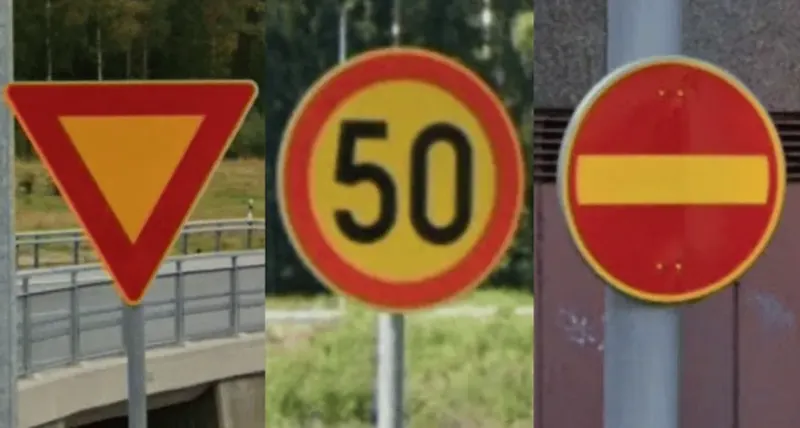 Road sign
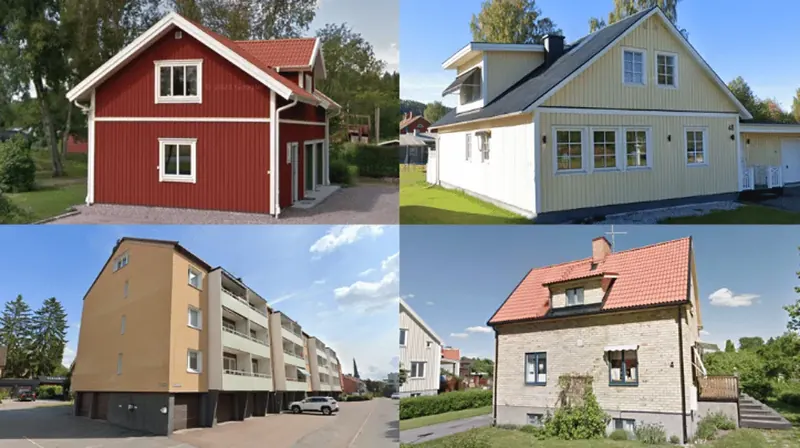 Countryside house
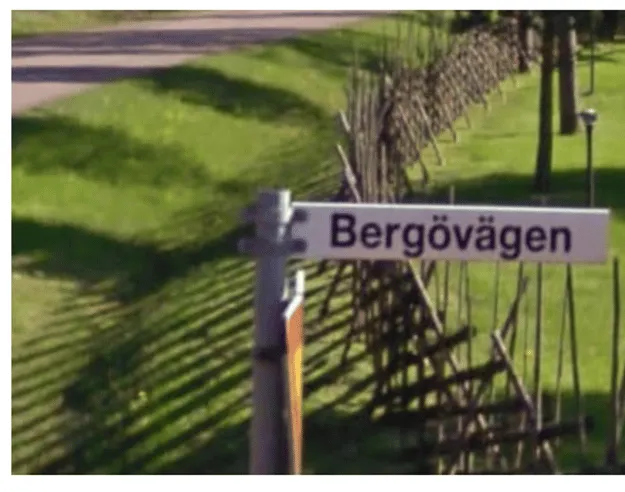 Language on signs
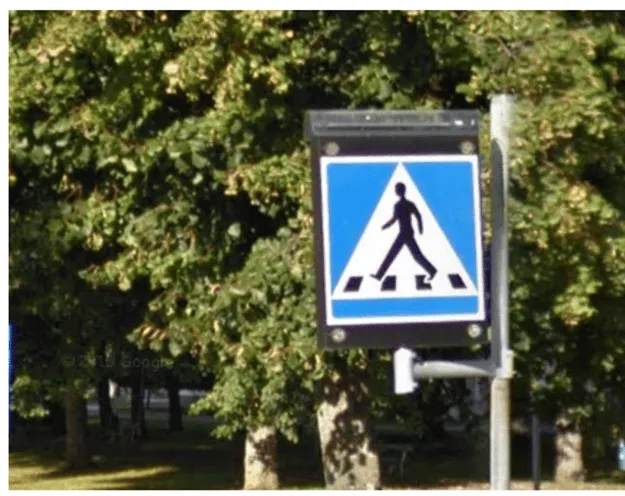 Pedestrian crossing sign
How to learn them and keep them
Reading this page is not enough: in a week you will have forgotten half of it. These clues stick when you review a few every day, right before you forget them. Start with Finland · Metas (29 cards) and Sweden · Metas (40), then mix them with the rest of the region in N & E Europe · Identify.
Study N & E Europe · IdentifyFinland and Sweden decks
More guides
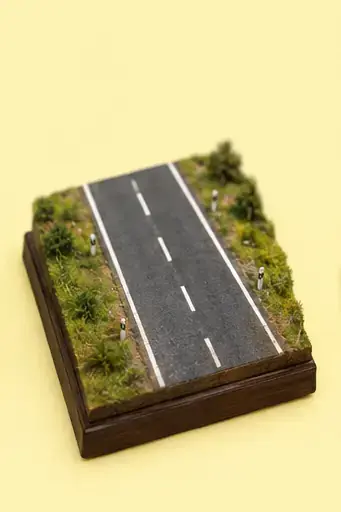
Bollards
The short posts at the edge of the road. Shape, colour and reflector change by country.
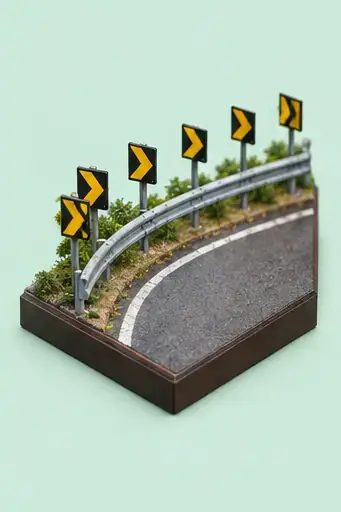
Poles
Wood, concrete or metal; holes, ladders and the top of the pole give away the region.
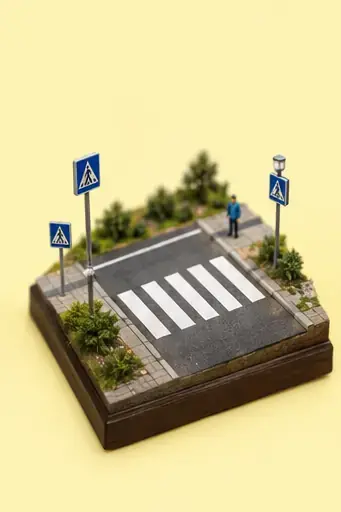
Road lines
Yellow or white centre, edge lines, doubles, dashes: one of the most reliable metas.
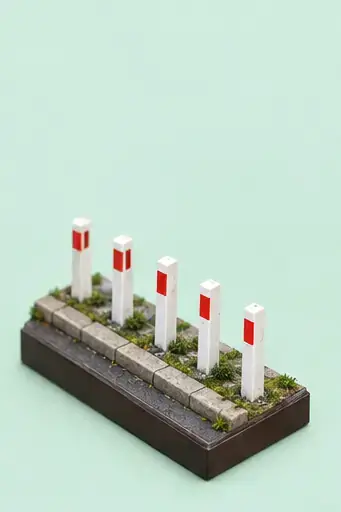
Camera car
Camera generation, antennas, mirrors and the colour of the car that shot the coverage.
Clues come from Learnable Meta maps by Lireax, trausi, LordKeks, Niklas, Swaggely, SB387, Zen, Swaggi, Icepelican, Major Bajor, SMN. Photos: Google Street View, © Google. Checked by hand by the MetaSpotter team on 19 October 2026. How we make the content