
Comparison and practice
How to tell Japan from Taiwan in GeoGuessr
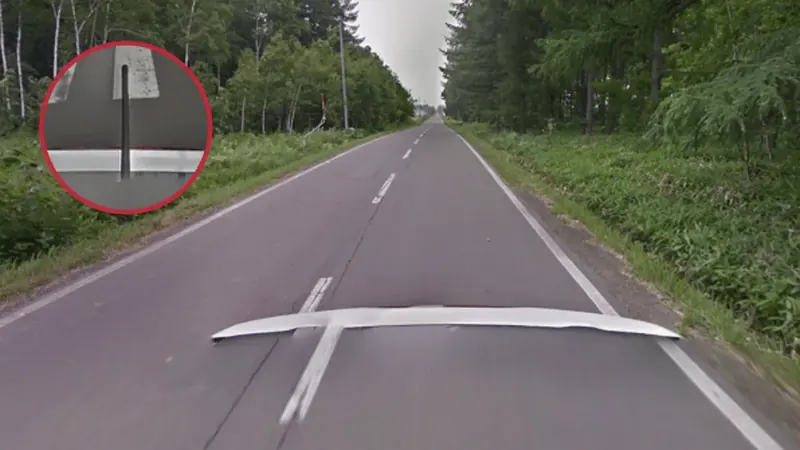
Check the camera first: in Japan it is mounted lower than usual, so the car blur is wide, the road looks wider and everything is seen from lower down. Then look at the tarmac and the poles. A double yellow centre line, red-painted edges and poles wrapped in black-and-yellow diagonal stripes down to the ground point to Taiwan; a dashed white centre line, white bollards with round reflectors and kerosene tanks beside the houses point to Japan.
- Japan clues
- 579
- Taiwan clues
- 51
- photos in the quiz
- 24
 © Google
At a glance
What changes across the border, according to our cards. Each clue comes with its photos further down.
| Clue | Japan | Taiwan |
|---|---|---|
| Camera | Mounted lower than usual: wide blur and a low point of view | In Gen 3 coverage, a black car with a long antenna and a red brake light in the middle of the boot |
| Road lines | Dashed white, solid yellow or mixed yellow-and-white centre line | Double yellow centre line with white edges; red edges where parking is banned |
| Poles | Round concrete with screw-like ridges; the striped reflector covers only one section | Black-and-yellow diagonal stripes down to the base; round concrete with small holes at the top |
| Bollards | Simple and white, with round reflectors on top; black versions exist | Black and rectangular, with two or three round reflectors |
| Houses | Wooden houses with tiled roofs; in the north, flat roofs with a ladder on the side | Boxy blocks, white-tiled walls and light-green tin sheds |
| Licence plates | White with green characters; yellow with black for kei cars | No equivalent in our cards |
| Curve signs | No equivalent in our cards | Black chevrons on a yellow background |
| Beside the houses | White kerosene tanks, more common the further north you go | No equivalent in our cards |
Clue by clue
Photos from real MetaSpotter cards, with the explanation each one carries.
-
01
Camera height
For privacy reasons, Japan’s Street View camera sits lower than usual: the car blur is much bigger, the road looks wider and the point of view hugs the ground. Outside Japan, only Sri Lanka and Switzerland have that low camera. In Taiwan’s Gen 3 coverage you can sometimes see the car: black, with a long antenna and a red brake light in the middle of the boot, similar to the one in Russia. This is the clue that decides the most between the two.
© Google🇯🇵 JapanFor privacy reasons Japan's Street View camera is mounted lower than usual, giving noticeably larger blur, a wider-looking road and a lower point of view. 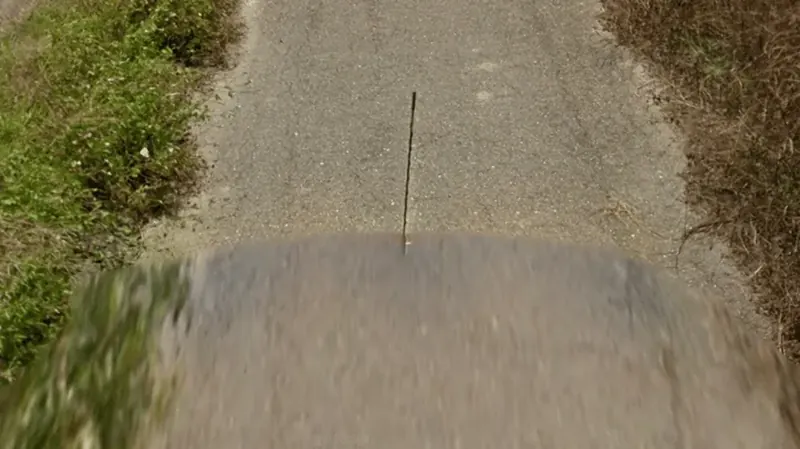 © Google
🇹🇼 TaiwanIn Generation 3 coverage, Taiwan's capture car is black with a long antenna and a red brake light mounted in the middle of the trunk, similar to the car seen in Russia. -
02
Road lines
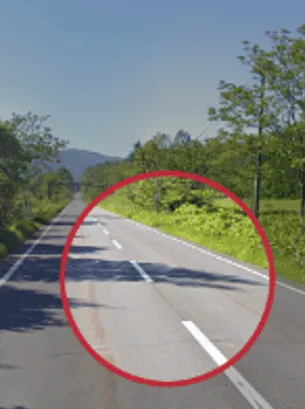
Taiwan usually paints a double yellow centre line with a single white line along each edge; narrow roads may have only the white edges and no centre line, or a single dashed yellow line. Red edge lines, marking no-parking zones, are essentially unique to Taiwan, especially in cities. Japan mostly uses three combinations: a dashed white centre line with solid white edges, a single solid yellow centre line, or a mixed yellow-and-white centre line. A dashed white centre line points to Japan; a double yellow one points to Taiwan.
 © Google
🇯🇵 JapanJapan commonly shows one of three road-line combinations: dashed white middle line with solid white edges, a solid yellow middle line, or a mixed yellow-and-white middle line. 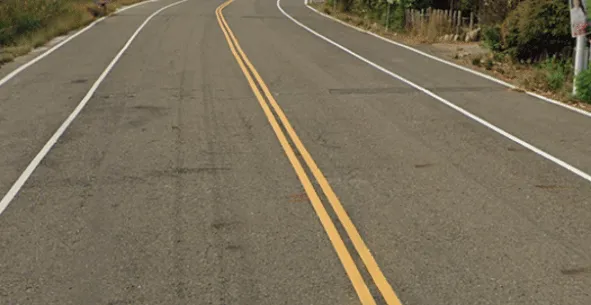 © Google
🇹🇼 TaiwanTaiwanese roads typically show double yellow center lines with single white outer lines, though thinner roads may have only white outer lines and no center line at all. Red outer lines marking no-parking zones are also essentially unique to Taiwan, especially in cities. 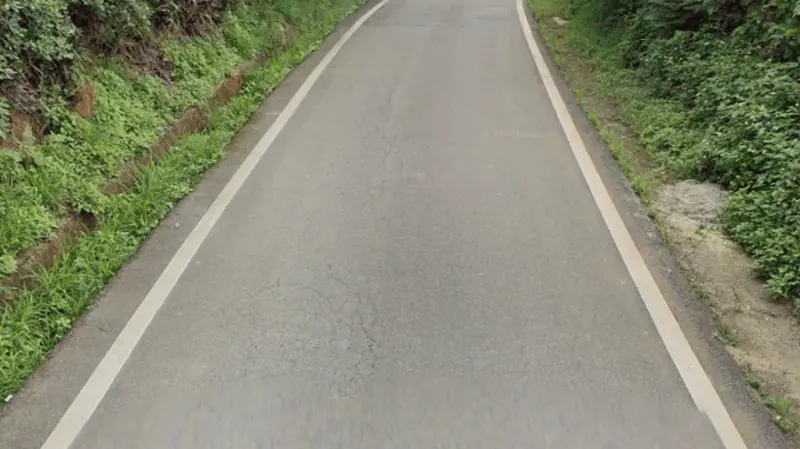 © Google
🇹🇼 TaiwanRoads with only white outer lines and no center line at all are common in Taiwan, and in the absence of better clues this style of road line is a good way to identify the country. -
03
Poles
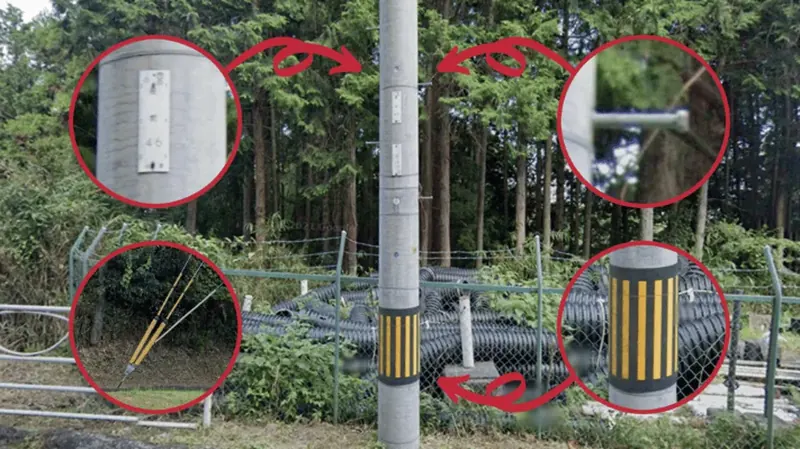
In Taiwan many poles are wrapped in black-and-yellow diagonal stripes, with a slight orange tint, running all the way down to the base; concrete poles are round, with small holes along the top section, as in Cambodia. Japanese poles are round concrete with screw-like ridges and carry plates, guy wires, reflectors and, across much of the country, grey box-shaped insulators. Some Japanese regions use black-and-yellow striped reflectors too, but they are a pad on one section of the pole, not a wrap that reaches the ground.
 © Google
🇯🇵 JapanJapan mostly uses round concrete poles with screw-like ridges, often carrying electrical plates, guy-wires and reflectors. 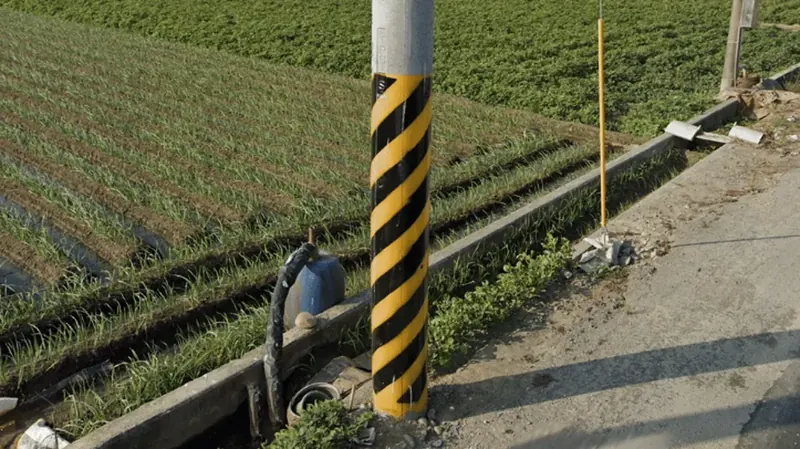 © Google
🇹🇼 TaiwanPoles almost always carry black-and-yellow diagonal stripes running all the way to the bottom. South Korea has similar markings, but they are much shorter and stop before reaching the ground. -
04
Bollards
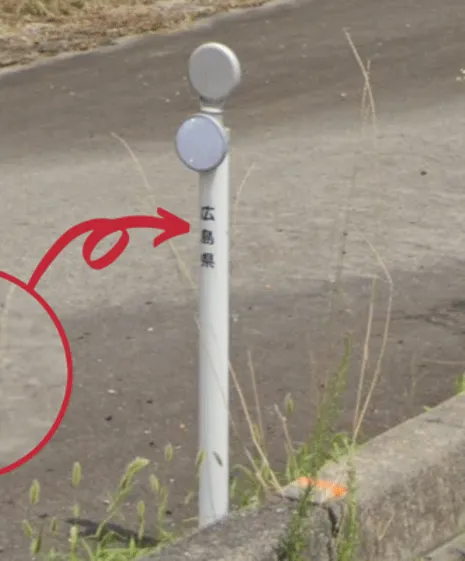
Japan mostly uses simple white bollards with one or more round reflectors on top, sometimes with the city or prefecture name written in kanji. Taiwan’s are black and rectangular, with two or three round reflectors, and similar reflectors turn up bolted onto guardrails. They look alike, and Japan has black versions too, so colour leans rather than decides: a white post with the reflector on top points to Japan; a black head with several reflectors points to Taiwan.
 © Google
🇯🇵 JapanJapan usually uses simple white bollards with one or more circular reflectors on top; black versions and other extensions exist, and the city or prefecture name is sometimes written on them in kanji. 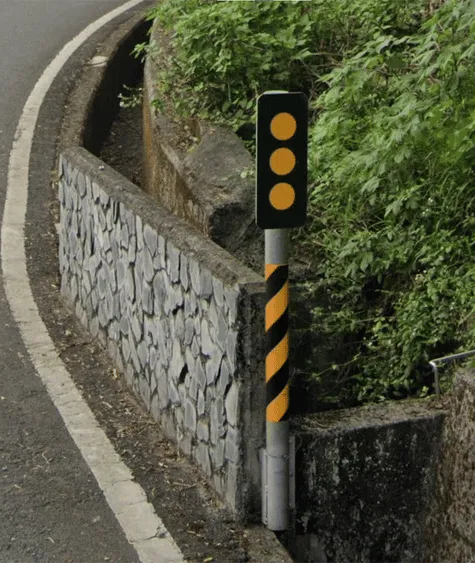 © Google
🇹🇼 TaiwanTaiwan uses black rectangular bollards with two or three circular reflectors, and similar lollipop-shaped reflectors also appear bolted onto guardrails, a look reminiscent of Japan. -
05
Houses and roofs
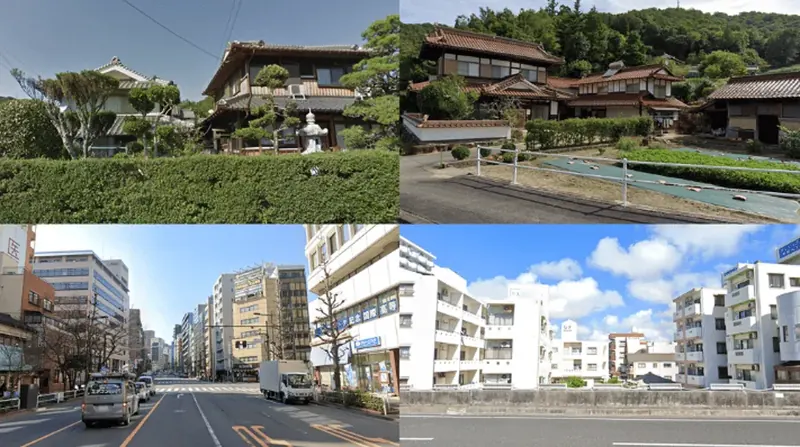
Japan mixes wooden country houses with tiled roofs, dense modern city blocks and reinforced coastal buildings; that mix, with narrow streets and utility poles everywhere, is a giveaway in itself. Further north, roofs turn flat or gently sloped to cope with snow, and many houses have a ladder fixed to one side. Taiwanese housing ranges from cramped multi-storey blocks to flat single-storey houses with a backyard; many buildings are boxy, walls are often clad in white tile, and tin sheds painted light green are common.
 © Google
🇯🇵 JapanJapanese architecture is very varied, ranging from traditional wooden country houses with tiled roofs to dense modern city blocks and reinforced coastal buildings, but the mix of styles, narrow streets and utility poles is a strong overall giveaway for Japan. 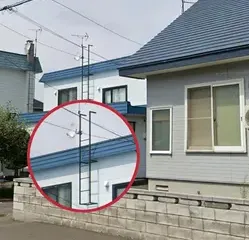 © Google
🇯🇵 JapanJapanese roofs shift from tiled in the south to flat or low-sloped further north to shed heavy snow, and northern houses often have ladders on the side for clearing it; the same flatter roofs also appear at high elevation or in heavy-snow areas further south. 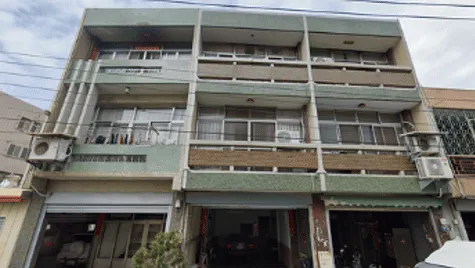 © Google
🇹🇼 TaiwanTaiwanese architecture ranges from cramped multi-story housing to flat single-story houses with backyards. Many buildings have a boxy shape, walls are often covered in white tile, and tin sheds painted light green are common. -
06
Clues that point to Japan
White cylindrical kerosene tanks beside the houses are a heating fixture found only in Japan, and they get more common the further north and the higher up you are. Patterned concrete retaining walls help in rural areas with little else to go on. And if you catch a licence plate, standard cars carry a white plate with green characters, while small kei cars carry a yellow one with black characters.
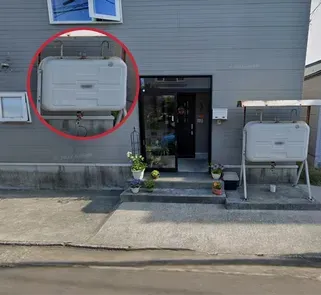 © Google
🇯🇵 JapanWhite cylindrical kerosene/heating-oil tanks mounted outside houses are a Japan-only heating fixture. They get more frequent the further north you go and in high-elevation mountain areas. 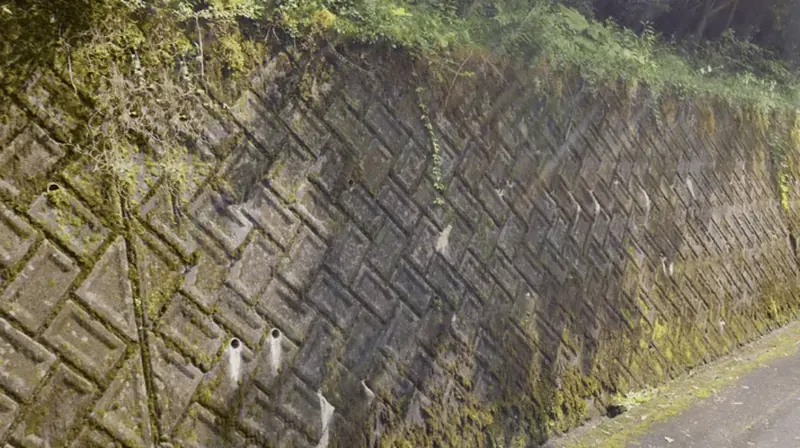 © Google
🇯🇵 JapanThis patterned concrete retaining wall is a useful clue for Japan, especially in rural areas with little other information. 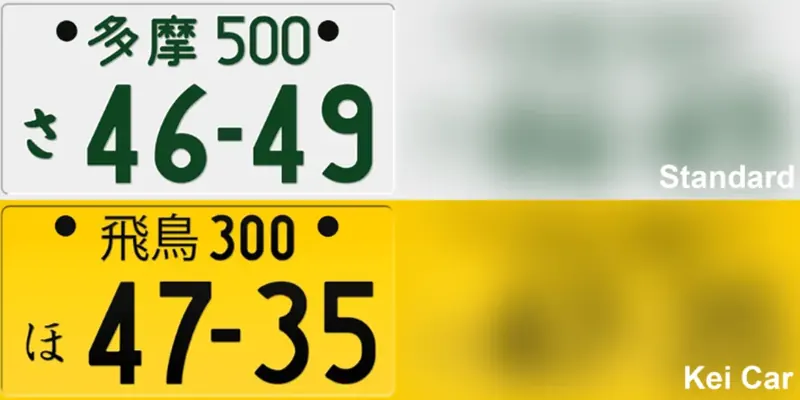 © Google
🇯🇵 JapanJapan uses a standard white plate with green text, and a smaller yellow plate with black text for kei cars (light automobiles).
The hard case: Okinawa and the islands
Okinawa is subtropical, and it is where Japan looks most like Taiwan: white flat-roofed concrete buildings built to withstand typhoons, sugarcane fields and, on the outer islands, reddish soil, which Kinmen, in Taiwan, has too. Palms do not settle it either: coconut palms are common in southern Taiwan towards the coast, and there are palm-lined roads in Miyazaki and Okinawa. On top of that, poles in Kyushu and Okinawa carry black-and-yellow striped reflectors. Here the camera height decides, backed up by the road lines.
- OkinawaWhite flat-roofed concrete, shisa lion statues and stone plaques at entrances, and often more than two plates stacked on the same pole.
- Miyako and YaeyamaRed soil and sugarcane; pole plates topped with a 7 (Miyako) or an 8 (Yaeyama).
- MiyazakiThe Nichinan coast road (Route 220) has tall palms between the lanes along part of its length.
- Kinmen (Taiwan)Low stone-and-brick houses with swallowtail roofs, rows of casuarina trees and reddish soil.
- Penghu (Taiwan)Cream-coloured houses, blue-painted road edges and rows of Norfolk Island pines.
How to learn them and keep them
Reading this page is not enough: in a week you will have forgotten half of it. These clues stick when you review a few every day, right before you forget them. Start with Japan · Metas (30 cards) and Taiwan · Metas (29), then mix them with the rest of the region in S & E Asia · Identify.
Study S & E Asia · IdentifyJapan and Taiwan decks
More guides
Bollards
The short posts at the edge of the road. Shape, colour and reflector change by country.
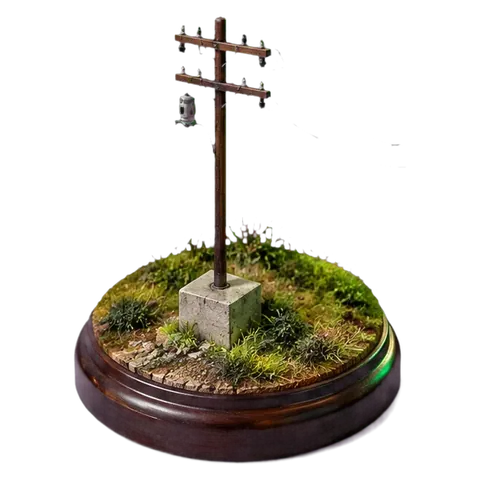
Poles
Wood, concrete or metal; holes, ladders and the top of the pole give away the region.
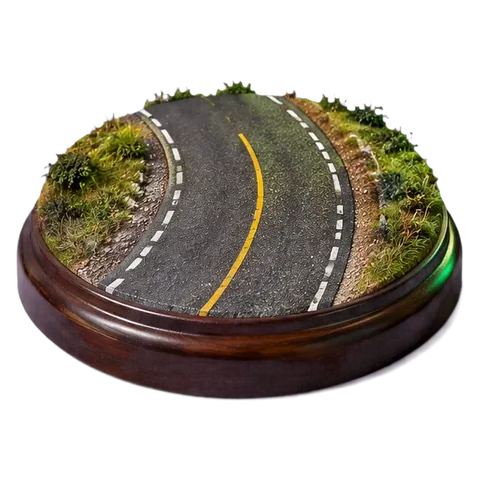
Road lines
Yellow or white centre, edge lines, doubles, dashes: one of the most reliable metas.
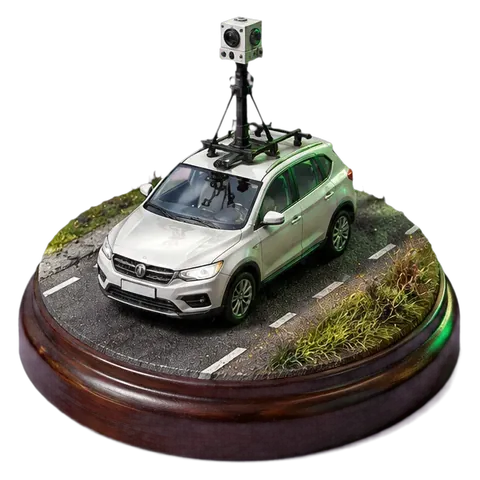
Camera car
Camera generation, antennas, mirrors and the colour of the car that shot the coverage.
Clues come from Learnable Meta maps by Lireax, realBeelzebuub, SB387, Swaggi, Major Bajor, LordKeks, Stingray, Zen. Photos: Google Street View, © Google. Checked by hand by the MetaSpotter team on 19 October 2026. How we make the content