
Comparison and practice
How to tell Norway from Sweden in GeoGuessr
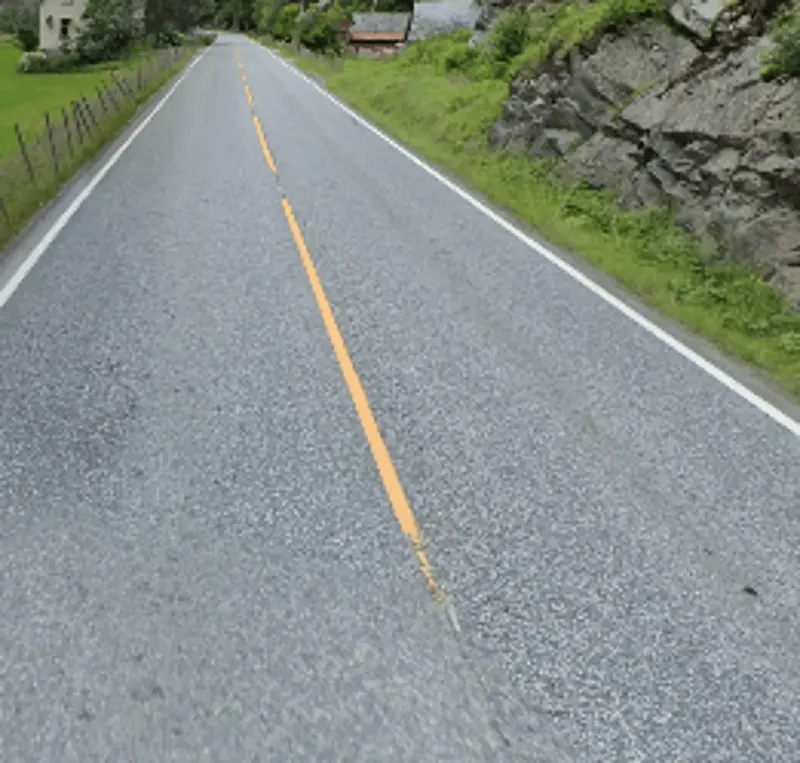
Look at the road lines first. Long dashes on the edge line and a yellow centre line with an orange tinge point to Norway; shorter dashes and lines that stay white point to Sweden. Then confirm with the signs: inside the red border the background is white in Norway and yellow in Sweden, and yellow-on-blue chevrons are Swedish. Æ and Ø on a sign mean Norway; Ä and Ö mean Sweden.
- Norway clues
- 186
- Sweden clues
- 124
- photos in the quiz
- 24
 © Google
At a glance
What changes across the border, according to our cards. Each clue comes with its photos further down.
| Clue | Norway | Sweden |
|---|---|---|
| Road lines | Long dashes on the edge; on bigger roads, a yellow centre line with an orange tinge | Shorter dashes and lines that stay white; on highways the edge line looks solid but is sectioned |
| Signs | White background inside the red border | Yellow background inside the red border |
| Chevrons | Yellow on black | Yellow on blue (the only country in Europe, bar rare cases in Luxembourg) |
| Letters and streets | Æ, Ø and Å; streets in “-gate” or “-vei(en)” | Å, Ä and Ö; streets in “-gatan” or “-vägen” |
| Bollards | Flat and narrow, black stripe at a slight angle, silver reflector | Several types; two of ours have a completely horizontal black section |
| Snow poles | Orange, with a thin white reflector towards the middle | Orange, with a tall white reflector slightly above the middle |
| Guardrails | Often on wooden posts | Wooden posts uncommon |
| Licence plates | Green on commercial vehicles | No equivalent in our cards |
| Google car | Of Sweden’s three cars, only the blue one appears | Gen 4 in red, white or blue; red or white confirms Sweden |
| Houses | More white and black houses; grass roofs on traditional ones | More red and yellow; white houses on the west coast |
| Bus stops | Small blue sign with a white bus | Many different designs, none like Norway’s |
| Landscape | Very mountainous, with fjords along most of the coast | A mix of flat, hilly and mountainous; bare summits only in the north-west |
Clue by clue
Photos from real MetaSpotter cards, with the explanation each one carries.
-
01
Road lines
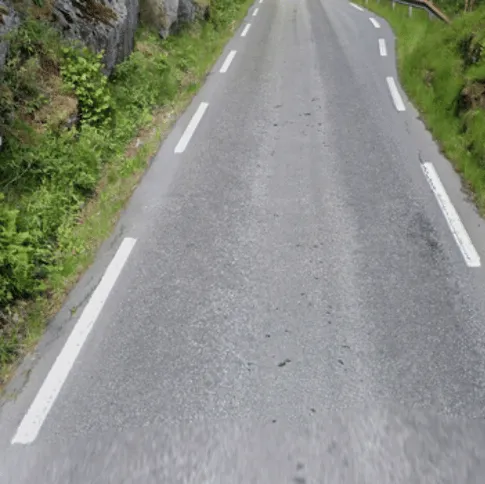
Check how long the dashes on the edge line are: Norway paints long ones, Sweden similar but shorter ones. On bigger Norwegian roads the edge lines turn solid and a yellow centre line appears, with an orange tinge that is easy to recognise; in Sweden the lines stay white. On Swedish highways the edge line looks solid from a distance but is actually split into small sections. Other European countries paint short dashes too, so pair this with another clue.
 © Google
🇳🇴 NorwaySmaller Norwegian roads have long dashed white outer lines, while bigger roads add solid outer lines and an orange-tinged yellow middle line. Sweden's dashes are shorter and its lines stay white, and Finland's outer lines are always solid. © Google🇳🇴 NorwayLarger Norwegian roads use solid white outer lines with a yellow middle line that has a distinct orange tinge, making it easy to recognise. 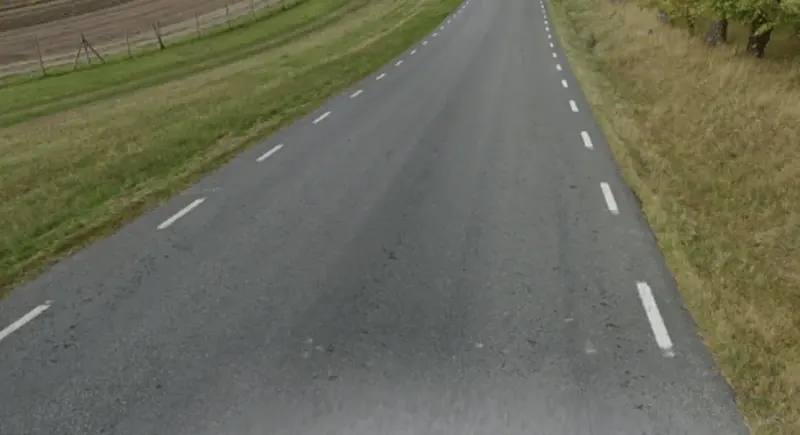 © Google
🇸🇪 SwedenIn the Nordic countries, short dashed outer road lines point to Sweden, long dashes to Norway, and full unbroken lines to Finland. Other European countries can also use short or medium dashes, so use this together with other clues. -
02
Sign backgrounds and chevrons
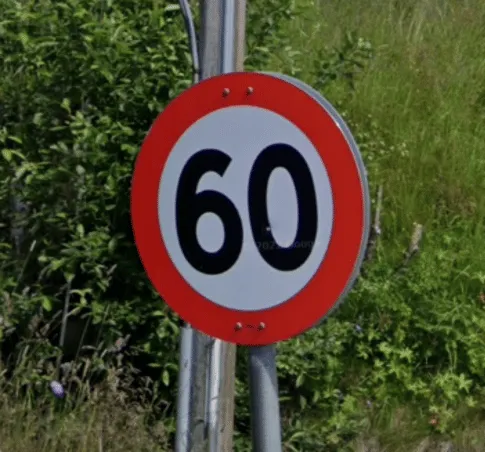
The red border is the same; the background is what changes. In Norway these signs are white inside; in Sweden they are yellow. The chevrons that mark bends split the two cleanly as well: Norway uses yellow on black, while Sweden is the only country in Europe with yellow on blue (very rarely seen in Luxembourg too).
 © Google
🇳🇴 NorwayNorwegian traffic signs have a red outline on a white background, while Swedish and Finnish signs of the same kind have a yellow background. 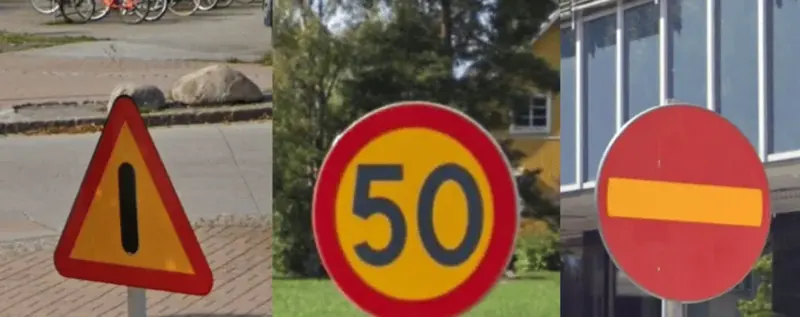 © Google
🇸🇪 SwedenSwedish warning and information signs have a plain red border around a yellow background. Finnish signs look almost identical but add a thin yellow border just outside the red one. 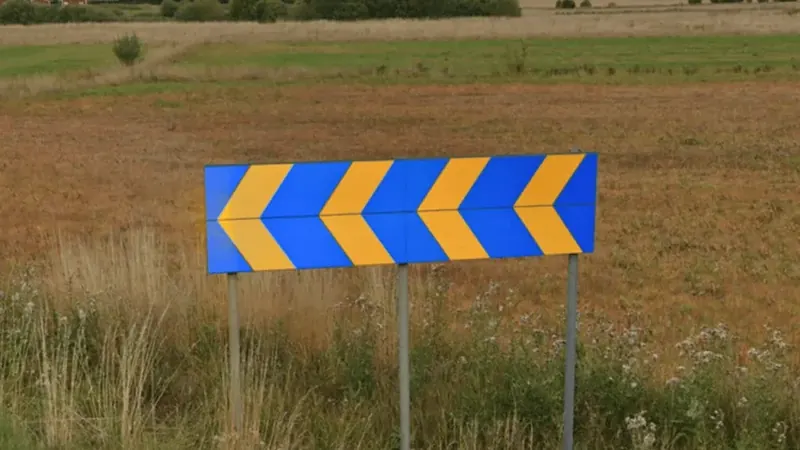 © Google
🇸🇪 SwedenSweden is the only country in Europe that uses yellow arrows on a blue background for chevron signs. Very rarely, similar yellow-on-blue chevrons also appear in Luxembourg. -
03
Letters and street names
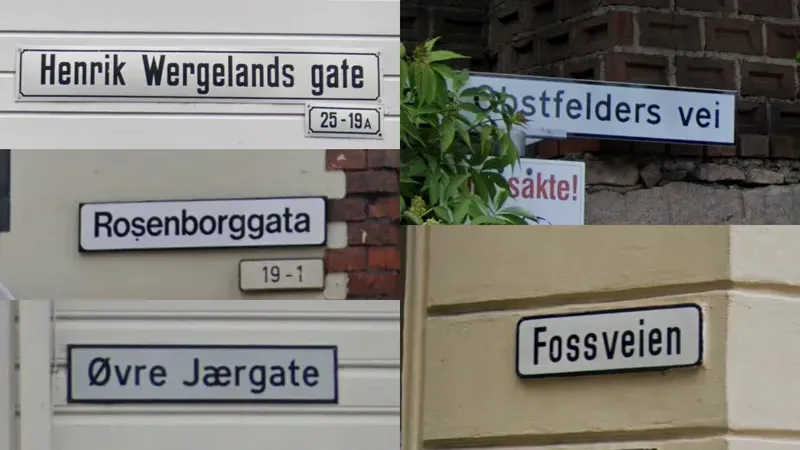
Both languages use Å, but Norwegian adds Æ and Ø, and Swedish adds Ä and Ö. Street names give it away too: Norwegian ones end in “-gate” or “-vei(en)”, Swedish ones in “-gatan” or “-vägen”. Check how the sign is mounted as well: in Norway it usually sits centred on top of its post, while in Sweden it is more often fixed to the side of a post or lamp post.
 © Google
🇳🇴 Norway · NorwegianNorwegian is a North Germanic language using the special letters Æ, Ø and Å; street names typically end in "-gate" or "-vei(en)", unlike Danish "-gade"/"-vej" or Swedish "-gatan"/"-vägen". 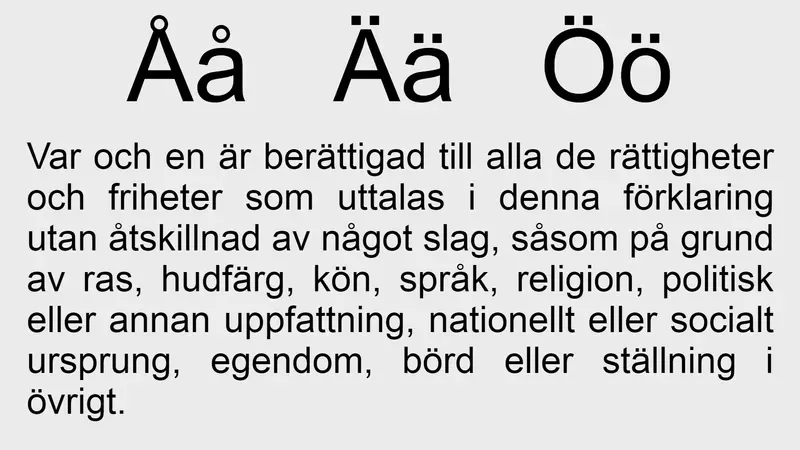 © Google
🇸🇪 Sweden · SwedishSwedish is a North Germanic language using the special letters Å, Ä and Ö. Danish and Norwegian use Å but not Ä/Ö (they use Æ/Ø instead), Icelandic only uses Ö, and Finnish (not Germanic) also uses Ä/Ö. The Swedish word for road is väg/vägen and for street is gata/gatan, unlike Norwegian vei/veien or Danish vej/vejen and gade. 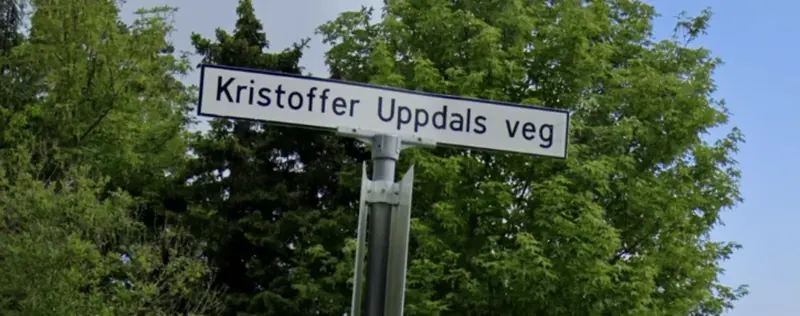 © Google
🇳🇴 NorwayNorwegian street name signs are usually centred on top of their sign post, while in Sweden they are more commonly attached to the side of a post or lamp post. -
04
Bollards
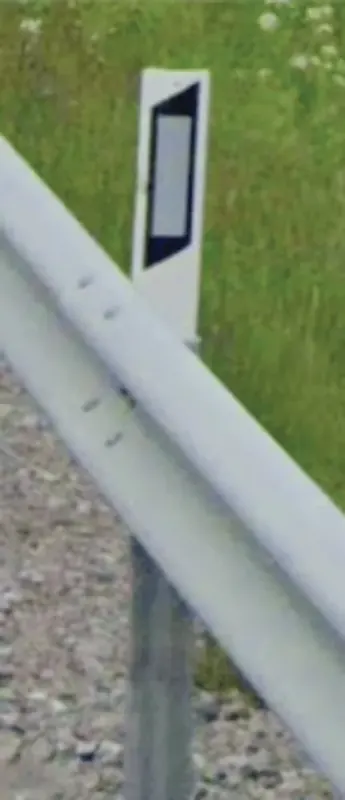
The Norwegian bollard is narrow, flat and black and white, with a silver rectangular reflector on the front, two white dots on the back and a black stripe set at a slight angle. Sweden has several types; two of those in our cards have a completely horizontal black section: a cylindrical one, common on the west coast, in Värmland and in southern Dalarna, and one with a black rectangle around the reflector, typical of major roads in the northern half. An angled stripe leans Norway; a horizontal one leans Sweden.
 © Google
🇳🇴 NorwayNorwegian bollards are narrow, flat and completely black and white, with a silver rectangular reflector on the front and two white dots on the back, and the black stripe sits at a slight angle. 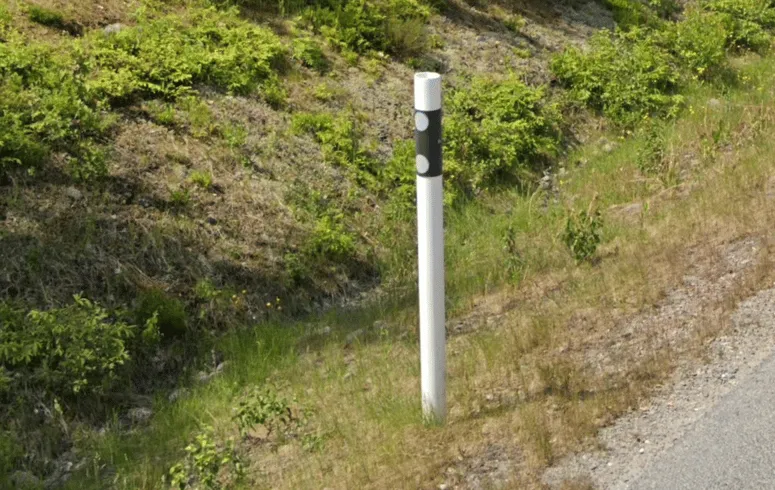 © Google
🇸🇪 SwedenThis cylindrical bollard has a completely horizontal black section near the top. It is most commonly found near the west coast and in Värmland and southern Dalarna. 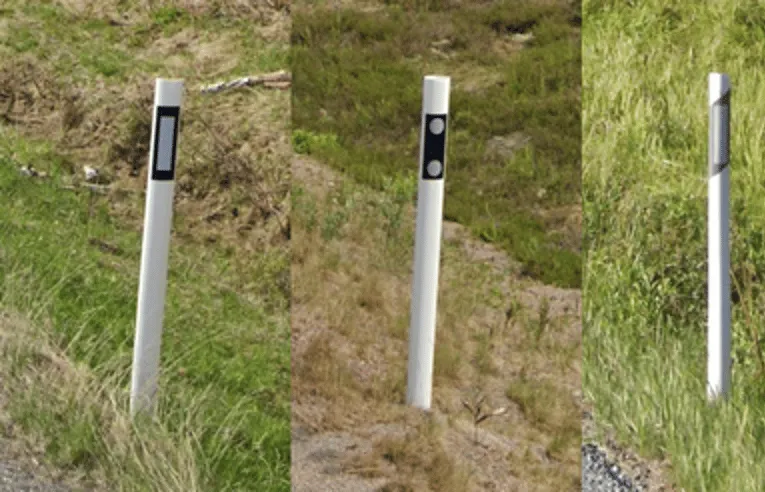 © Google
🇸🇪 SwedenFlat bollards, or cylindrical bollards with a black rectangle containing the reflector, are most commonly found on major roads in the northern half of Sweden. A similar-looking flat bollard exists too, but on that type the black section is not horizontal. -
05
Snow poles and guardrails
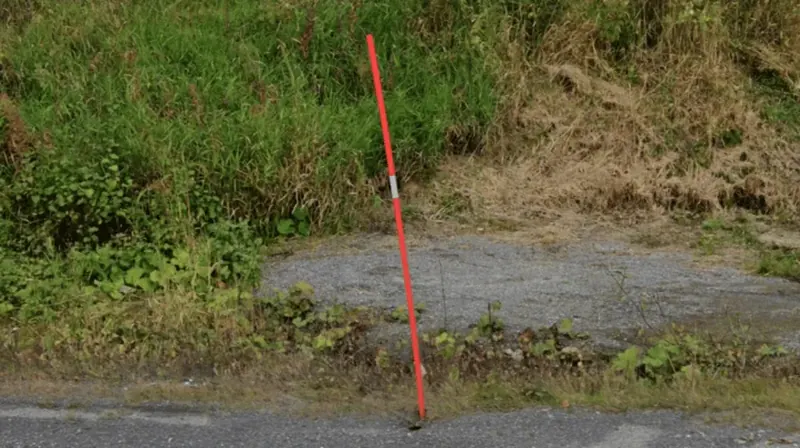
Snow poles are usually orange in both countries; the reflector is what differs. In Norway it is white, fairly thin and sits towards the middle of the pole. In Sweden it is taller and sits slightly above the middle, sometimes with a second, thinner one above it. Guardrails standing on wooden posts are common in Norway and uncommon in Sweden.
 © Google
🇳🇴 NorwayNorwegian snow poles are typically orange with a fairly thin white reflector placed toward the middle of the pole. Swedish poles have a wider reflector higher up, and Finnish poles have their reflector at the very top. 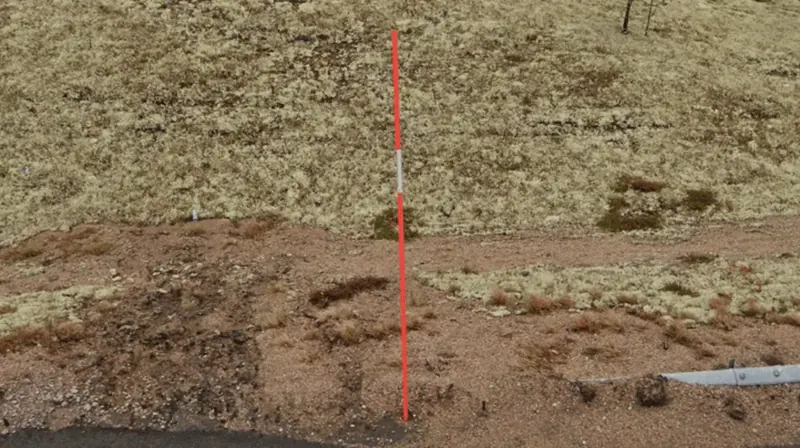 © Google
🇸🇪 SwedenSwedish snow poles are typically orange with a tall white reflector positioned slightly above the middle of the pole; some have a second, thinner reflector above the main one. Finnish poles have a much thinner reflector very close to the top, while Norwegian poles usually have one or two thinner reflectors, often close to the middle. 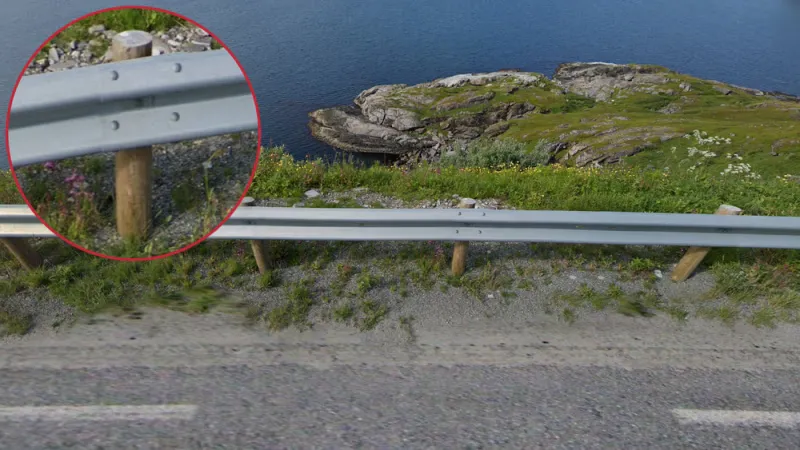 © Google
🇳🇴 NorwayNorway uses A-type guardrails that often stand on wooden posts, unlike neighbouring Sweden or Finland. -
06
Licence plates and the Google car
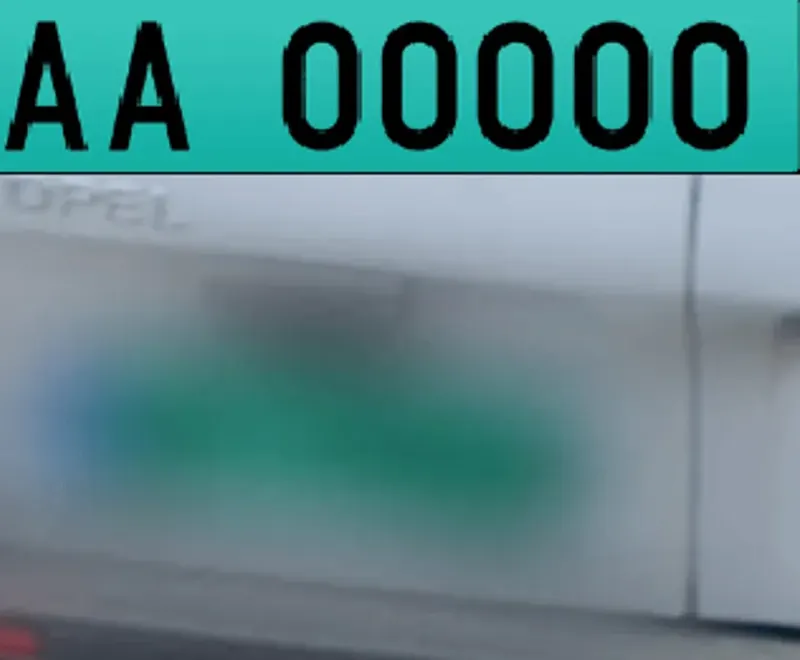
A van or lorry with a green plate points to Norway, where commercial vehicles carry green plates instead of white ones. We have no plate clue for Sweden, but we do have one for the car: Swedish Gen 4 coverage was shot from three cars, red, white and blue. Only the blue one also appears in Norway, so a red or white car confirms Sweden.
 © Google
🇳🇴 NorwayCommercial vehicles in Norway, often vans and trucks, carry green plates instead of the usual white ones. Elsewhere in Europe green plates are mostly seen on electric cars, not on commercial vehicles. 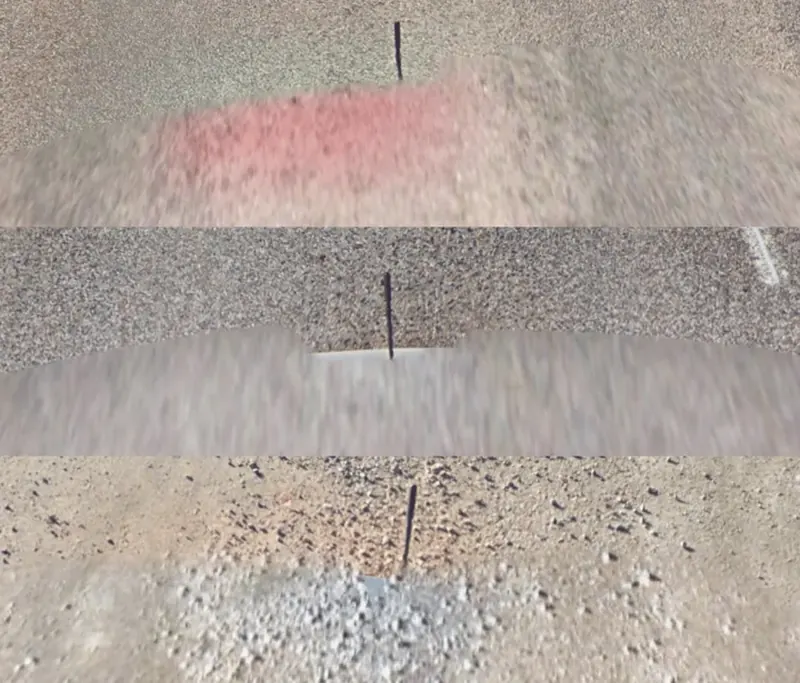 © Google
🇸🇪 SwedenGeneration 4 coverage in Sweden was captured by three cars: red, white and blue, each seen with or without a visible antenna. Only the blue car also appears in Norway, Finland and Denmark, so red or white confirms Sweden. -
07
House colours
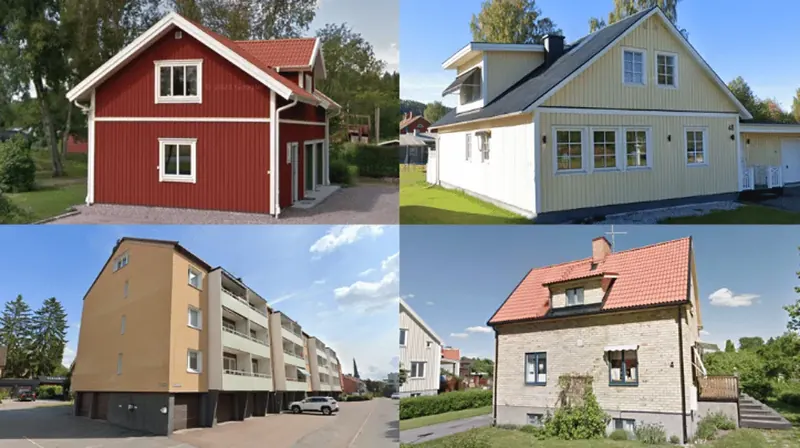
Both countries paint wooden houses a dark red, so red alone does not decide. Norway has more white houses and more black ones too; Sweden leans towards red and yellow. Grass roofs on traditional houses are common in Norway and far rarer in Sweden. Watch the Swedish west coast, though: between Gothenburg and the Norwegian border, white and pale yellow houses are unusually common.
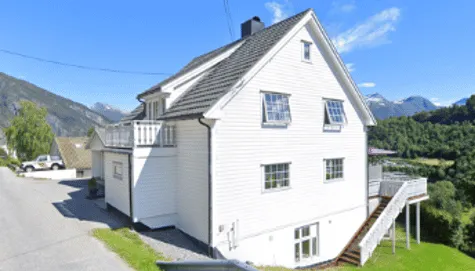 © Google
🇳🇴 NorwayMost Norwegian houses are wood; many are painted red, as is also typical in Sweden and Finland, and black houses are also fairly common, more so than in those countries, while Sweden and Finland tend to have more red and yellow houses and Norway more white ones. 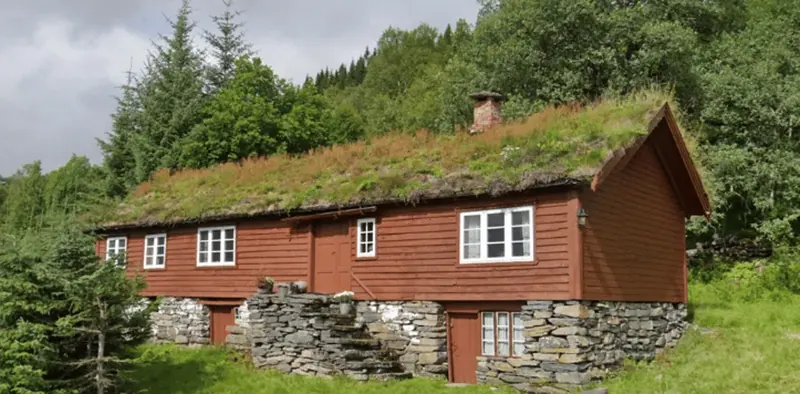 © Google
🇳🇴 NorwayTraditional houses in Norway commonly have grass-covered roofs, a feature that is far less common in Sweden and Finland. 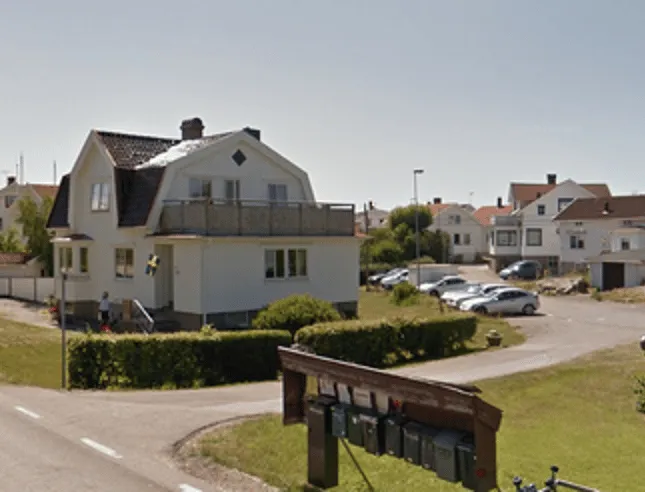 © Google
🇸🇪 SwedenSwedish houses are usually very colourful, but on the west coast, especially between Gothenburg and the Norwegian border, white and light-yellow houses are unusually common. -
08
Mountains and fjords
Norway is very mountainous, with fjords along most of its coast. Sweden mixes flat, hilly and mountainous ground, and mountains with completely bare, treeless summits only appear in its north-west, along the Norwegian border. A fjord between tall mountains leans Norway; a bare summit on its own does not rule out Sweden.
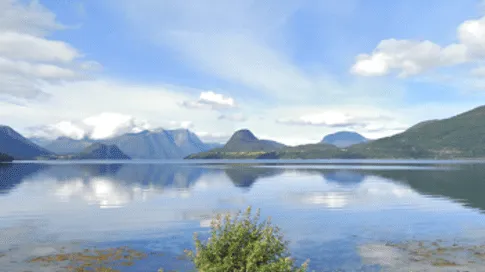 © Google
🇳🇴 NorwayNorway is very mountainous with fjords along most of its coast, unlike flat Finland and Denmark; Sweden mixes flat, hilly and mountainous terrain. 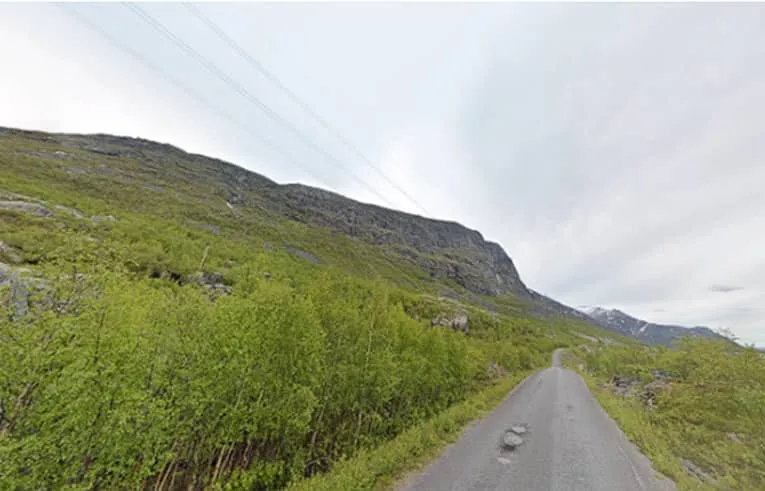 © Google
🇸🇪 SwedenForested mountains exist in several parts of Sweden, but mountains whose tops are completely bare of trees only occur in the northwestern counties along the Norwegian border.
The hard case: the mountain border and Sweden’s west coast
Near the border, landscape and houses do not decide: north-western Sweden has mountains with bare summits right along the Norwegian border, and the Swedish west coast has plenty of white houses. There, read the road: the length of the dashes and the colour of the centre line, the sign backgrounds, the colour of the chevrons and the angle of the black stripe on the bollards.
- North-western SwedenThe country’s only treeless summits are along the Norwegian border.
- Swedish west coastWhite and pale yellow houses between Gothenburg and Norway, and rows of small red boathouses in fishing towns.
- Blue Google carSeen in Sweden, but also in Norway; only red or white confirms Sweden.
- Blue M signSweden’s passing-place sign has a lookalike in Norway; on the Norwegian one, the middle point of the M reaches the bottom.
What does not decide
These clues look the same on both sides of the border, so on their own they do not decide. In MetaSpotter, when a card shows one of them, the other country is never offered as a wrong answer.
 Countryside house
 Spruce forest
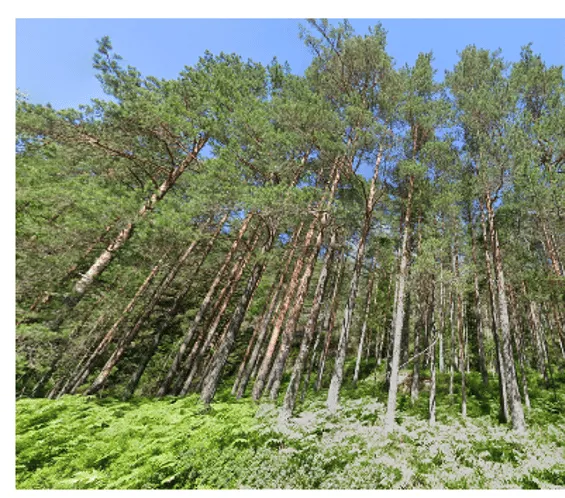 Pine forest
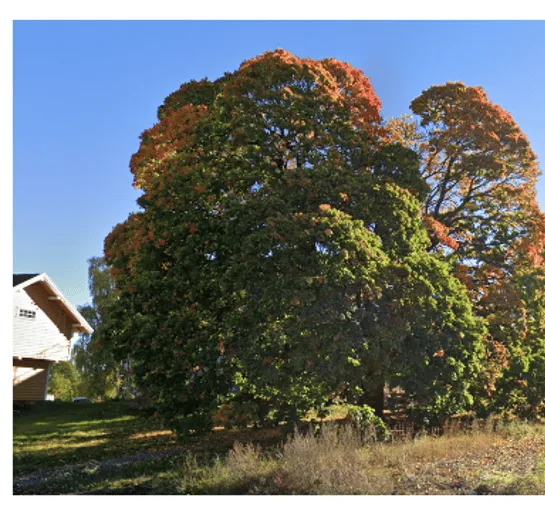 Maple tree
How to learn them and keep them
Reading this page is not enough: in a week you will have forgotten half of it. These clues stick when you review a few every day, right before you forget them. Start with Norway · Basics (24 cards) and Sweden · Metas (40), then mix them with the rest of the region in N & E Europe · Identify.
Study N & E Europe · IdentifyNorway and Sweden decks
More guides
Bollards
The short posts at the edge of the road. Shape, colour and reflector change by country.
Poles
Wood, concrete or metal; holes, ladders and the top of the pole give away the region.
Road lines
Yellow or white centre, edge lines, doubles, dashes: one of the most reliable metas.
Camera car
Camera generation, antennas, mirrors and the colour of the car that shot the coverage.
Clues come from Learnable Meta maps by Lireax, trausi, LordKeks, Niklas, SB387, Zen, timbo, Swaggi, Stingray, Major Bajor, MasterDane28, SMN, Swaggely, Lorinloewe4444. Photos: Google Street View, © Google. Checked by hand by the MetaSpotter team on 19 October 2026. How we make the content